
I was featured by Sensuali in an article titled Introducing Polyamorous Kink & Intimacy Coach, Lilith Foxx, and the feature gave me an opportunity to think more deeply about an intersection that comes up constantly in my work: the place where polyamory and kink meet.
As a polyamory and kink coach, I work with people who are often navigating several layers of relationship complexity at once. Someone may be learning how to communicate with multiple partners while also negotiating a D/s dynamic. Another person may be trying to understand whether a BDSM agreement applies only within one relationship or affects their other partnerships. A couple opening their relationship may simultaneously be discovering kink, while an experienced polyamorous person may be entering their first serious power exchange dynamic.
Polyamory and BDSM are separate relationship and sexual frameworks. Being polyamorous does not make someone kinky, and enjoying BDSM does not imply that someone wants non-monogamy. They do, however, raise some overlapping questions about consent, communication, autonomy, boundaries, expectations, and how we create relationships intentionally rather than relying exclusively on default scripts.
That overlap is where working with a polyamory and kink coach can be especially useful. Coaching provides a non-clinical space to clarify what you want, develop communication strategies, examine assumptions, and build practical systems for relationships that may not fit conventional models.
My own work is grounded in sexuality education rather than psychotherapy. If you are unfamiliar with that distinction, my guide to sexuality coaching explains what coaching can address, what happens in sessions, and when therapy or medical care may be more appropriate.
Table of Contents
What Does a Polyamory and Kink Coach Do?
A polyamory and kink coach provides education, reflection, communication support, and practical skill-building related to consensual non-monogamy and BDSM.
That might mean helping someone prepare to introduce non-monogamy into an existing relationship, clarify boundaries between several partnerships, communicate about sexual health agreements, explore jealousy without treating it as a failure, or think through how time and energy are being distributed across relationships.
On the kink side, a polyamory and kink coach might help a client identify BDSM interests, understand different roles, communicate fantasies, develop negotiation skills, explore a preferred Dominant or submissive style, or consider how power exchange interacts with their other relationships.
Sometimes the work involves both at once.
Imagine that someone has a 24/7 D/s relationship with one partner and begins dating another person. Does the Dominant have authority over how the submissive conducts the new relationship? Does a rule established within the D/s dynamic affect someone who never consented to participate in that power structure? How does the submissive maintain the autonomy necessary to form another relationship while honoring agreements they genuinely want within the existing dynamic?
There is no universal answer to those questions. A polyamory and kink coach can help people identify what needs to be discussed without imposing one supposedly correct relationship model.
Polyamory and Kink Are Different, Even When They Overlap
It is worth separating these concepts before talking about their intersection.
Polyamory generally refers to consensually engaging in, or being open to, multiple romantic or intimate relationships with the knowledge and agreement of the people involved. Other forms of consensual non-monogamy may emphasize sexual relationships, swinging, open relationships, relationship anarchy, or arrangements that do not use the polyamory label.
BDSM refers broadly to Bondage and Discipline, Dominance and Submission, and Sadism and Masochism, along with a much wider range of kink activities and relationship dynamics.
A polyamory and kink coach should not assume that a person interested in one is automatically interested in the other. Plenty of kinky people are monogamous. Plenty of polyamorous people have no interest in BDSM.
Where the two often intersect is in the skills people need to navigate them intentionally. Both can require people to become more explicit about agreements that conventional relationship scripts often leave unspoken.
My guide to introducing non-monogamy into your relationship explores those conversations in greater detail, while my guide to what BDSM stands for provides a foundation for understanding BDSM roles and activities.
Why Communication Becomes More Complicated at This Intersection
People sometimes describe polyamory and BDSM as relationship styles that require exceptional communication. I would phrase that a little differently. Neither polyamory nor kink magically turns people into excellent communicators. They simply create situations where poor communication can become difficult to ignore.
A monogamous couple might never explicitly discuss what flirting means because both people assume they share the same expectations. Once additional relationships become possible, assumptions about dating, sexual contact, sleepovers, disclosure, scheduling, and emotional intimacy may suddenly require actual words.
BDSM introduces similar questions. What does submission mean? When does someone’s authority apply? What kinds of control are erotic rather than intrusive? Which activities require negotiation? What happens when someone changes their mind?
A person navigating both may be managing several sets of agreements simultaneously. That is one reason clients seek a polyamory and kink coach. The problem is not necessarily that they do not communicate. They may simply need better systems for figuring out which conversation belongs to which relationship.
My guide to enhancing communication in relationships covers some of the foundational skills that can make these conversations easier.
Consent Gets More Complicated When Relationships Interconnect
Consent is central to ethical BDSM, but polyamory introduces an additional layer: agreements made between two people can affect people who were not part of the original negotiation.
Research examining consent within BDSM has emphasized mutual informed consent, negotiation, and the distinction between consensual BDSM and abuse. Those principles remain important when power exchange exists within a larger relationship network.
Suppose one partner has agreed that their Dominant controls when they can orgasm. That may work perfectly well within their relationship. If the submissive begins a sexual relationship with another person, however, the agreement now has implications for someone who never negotiated with the Dominant.
That does not automatically mean the rule is unethical. It means the people involved need to think about where one relationship’s agreements end and another person’s autonomy begins.
A polyamory and kink coach can help clients identify these points of intersection before they become conflicts. The goal is not to eliminate complex agreements but to make sure everyone understands which agreements affect them and whether they have actually consented to that involvement.
The National Coalition for Sexual Freedom’s Consent Counts resources also provide useful information about consent and negotiation within BDSM.
Power Exchange Does Not Automatically Extend Across a Polyamorous Network
One of the most important questions at the intersection of polyamory and kink is who actually belongs to a power dynamic.
If I am submissive to one partner, that does not mean my other partners are automatically subordinate to my Dominant. If I am someone’s Dominant, their new partner does not automatically enter a relationship with me simply because my authority affects part of my submissive’s life.
A polyamory and kink coach can help people distinguish authority within a negotiated dynamic from authority over the entire relationship network.
This becomes particularly important in highly structured D/s relationships. A couple may have established extensive authority long before another relationship begins. Adding another partner does not automatically invalidate those agreements, but it may expose places where the existing structure needs to be reconsidered.
For example, an agreement requiring permission before making travel plans may have worked easily in a two-person relationship. Once someone begins spending weekends with another partner, the same agreement can affect the logistics and autonomy of a third person.
Nobody has to abandon power exchange simply because they are polyamorous. They may need to become more precise about the jurisdiction of that authority.
Agreements Are Not the Same Thing as Universal Rules
Polyamorous and kinky communities both use the language of rules, agreements, boundaries, protocols, and expectations, sometimes inconsistently.
A boundary describes what you will or will not participate in or what you need to protect your own well-being. An agreement is something people mutually decide to do. Rules may describe expectations within a relationship or D/s structure, although the word can carry different meanings depending on the people involved.
The label matters less than understanding how the arrangement actually functions.
When I work as a polyamory and kink coach, I am less interested in whether someone calls something a rule or agreement than in asking practical questions. Who agreed to it? Who does it affect? What happens if someone no longer wants it? Is it designed to manage a genuine need or to avoid a difficult emotional conversation? Does everyone understand it the same way?
A rule can feel deeply erotic within consensual power exchange and still deserve periodic reconsideration. An agreement that worked beautifully during the first year of a relationship may become impractical five years later.
Intentional relationships are not built by writing perfect rules once. They require the ability to revisit what people have created.
Jealousy Is Not a Failure of Polyamory
Jealousy comes up frequently in conversations with a polyamory and kink coach because people sometimes believe successful non-monogamy should eventually eliminate it.
That expectation can create more distress than jealousy itself.
Jealousy is not one emotion with one universal cause. It may involve fear, insecurity, loneliness, comparison, grief, anger, uncertainty, scarcity, or concern that an important need is not being met.
Instead of trying to make jealousy disappear, I encourage people to get more specific about what they are experiencing. Someone who says “I’m jealous of your new partner” may eventually realize that the harder issue is that their own scheduled time keeps getting canceled. Another person may feel anxious because relationship agreements have become unclear since a new partner entered the picture.
Those situations require different responses.
Compersion, or positive feelings associated with a partner’s happiness with another person, can be lovely when it occurs. It is not a requirement for successful polyamory. A polyamory and kink coach should not treat compersion as the enlightened endpoint everyone needs to reach.
You can support a partner’s autonomy without feeling delighted about every experience they have with someone else.
Kink Can Complicate Jealousy in Unexpected Ways
Power exchange can introduce forms of jealousy that do not always appear in other relationships.
Someone may be comfortable with their partner having sex with another person but feel unexpectedly emotional when that partner submits to someone else. Another person may happily accept multiple sexual relationships but consider particular honorifics, collars, rituals, or BDSM activities emotionally significant.
A Dominant may discover that watching their submissive participate in impact play with another Top feels very different from knowing they had ordinary sexual intercourse with someone else.
Those reactions do not automatically prove that anyone is too jealous for polyamory.
A polyamory and kink coach can help clients identify the meaning attached to particular BDSM practices. Sometimes the concern is exclusivity. Sometimes it involves fear of being replaced, the symbolic meaning of a ritual, assumptions about hierarchy, or uncertainty about whether the relationship is changing.
Once you know what the experience represents, the conversation becomes more useful than simply arguing about whether someone should be jealous.
Not Every Kink Has to Be Shared With Every Partner
Polyamory can create an opportunity to stop expecting one person to meet every sexual or relational preference, but that does not mean partners should be reduced to specialized service providers.
It is completely reasonable for different relationships to contain different forms of intimacy.
You may practice rope with one partner and have no interest in it with another. One relationship may contain substantial D/s while another has no power exchange at all. Someone may share a particular fetish with a casual partner that does not interest their nesting partner.
A polyamory and kink coach can help clients move away from the assumption that differences automatically represent deficiencies.
The fact that your partner enjoys something with someone else does not necessarily mean your relationship is missing something. Relationships can have different strengths, rituals, erotic languages, and forms of connection without being ranked according to who provides the most experiences.
A Yes No Maybe List Can Make Kink Conversations Easier
When people are navigating multiple kinky relationships, assumptions can multiply quickly. A yes no maybe list can help partners identify activities they enjoy, activities that are off limits, and areas they are still uncertain about.
The tool becomes even more useful when people add context.
Someone might mark bondage as yes with one partner and maybe with another because trust, skill level, emotional dynamics, or physical accessibility differ between relationships. A person may enjoy humiliation within an established D/s dynamic while having no interest in it during casual play.
Preferences do not have to remain identical across partners.
A polyamory and kink coach can use tools like these to help clients identify patterns without turning the checklist into permanent consent. What someone wrote six months ago does not override what they want now.
If you want a more detailed negotiation tool, you can also use my Negotiation Checklist.
Scheduling Is About More Than Making the Calendar Equal
Scheduling is one of the least glamorous parts of polyamory and one of the most common sources of conflict.
A shared calendar can be extremely useful, particularly when several people have work obligations, children, disabilities, school, different households, or multiple relationships. Color coding can make patterns easier to see and help prevent forgotten plans.
What a calendar cannot do is determine whether a relationship network is fair.
Equal time is not necessarily equitable time. One relationship may involve co-parenting and shared housing, while another includes one overnight every two weeks. Trying to make every relationship mathematically identical can create just as many problems as never considering time distribution at all.
When clients work with a polyamory and kink coach, I am more interested in whether people are getting the kinds of connection they have actually agreed upon. A calendar can help make those patterns visible, but it cannot decide what the relationships should look like.
For neurodivergent people who struggle with time blindness, transitions, or executive functioning, reminders and buffer periods may also reduce logistical stress. The system should support the people using it rather than becoming another complicated relationship chore.
Hierarchy Requires More Nuance Than Color Coding
Polyamorous discussions sometimes treat hierarchy as something that can be eliminated if everyone is sufficiently intentional.
Reality is more complicated.
Marriage, shared finances, co-parenting, housing, immigration, healthcare access, legal rights, caregiving responsibilities, and years of shared history can create material differences between relationships whether or not anyone calls those differences hierarchy.
A polyamory and kink coach should help clients examine those realities rather than pretending that every relationship occupies an identical position.
Hierarchy can also be intentional. Some people explicitly choose primary relationships or prioritize particular commitments. Others prefer non-hierarchical structures or relationship anarchy.
The important question is whether people understand the structure they are entering and whether the language being used accurately reflects the reality of the relationships.
Telling a newer partner that everyone is completely equal while major decisions are consistently controlled by an established couple does not eliminate hierarchy. It simply makes the hierarchy harder to discuss.
Couple Privilege Can Show Up in Kinky Spaces Too
Established couples can unintentionally approach new partners as additions to their existing relationship rather than as people forming relationships of their own.
Kink can intensify this problem when a couple already has established roles. A Dominant/submissive pair may imagine bringing someone into “their dynamic” without asking whether that person actually wants a relationship with both members of the couple or wants to participate in the same authority structure.
A polyamory and kink coach can help people slow down and identify which relationships actually exist.
If Alex dates Jordan and Jordan is submissive to Taylor, that does not automatically mean Alex has joined Jordan and Taylor’s D/s relationship. Alex may have a completely separate relationship with Jordan and little relationship with Taylor beyond cordial metamour interaction.
People are not accessories to existing relationships. This remains true even when the fantasy of a triad, household, leather family, or shared D/s structure is deeply appealing.
Accessibility Matters in Polyamory and Kink
Accessibility is central to my approach as a polyamory and kink coach because relationship advice frequently assumes people have unlimited energy, flexible schedules, predictable communication abilities, and bodies that cooperate with every sexual plan.
Chronic illness, disability, neurodivergence, sensory processing, executive functioning, mobility, pain, and fatigue can affect both polyamory and kink.
Someone may need more recovery time between dates. A person with chronic pain might have difficulty switching quickly from one social environment to another. An autistic person may prefer explicit communication rather than implied expectations. Someone with ADHD may need shared systems for remembering plans without being treated as irresponsible or uncaring.
Kink introduces additional accessibility questions involving positioning, restraint, sensory input, communication, and aftercare.
My accessibility-first approach explains more about how accessibility shapes my teaching and educational work.
Neurodivergent Relationships May Benefit From More Explicit Systems
A great deal of traditional relationship advice relies on intuition. You should know when your partner needs reassurance. You should remember important dates automatically. You should recognize when someone’s tone means something different from their words.
Those expectations do not work well for everyone.
As a polyamory and kink coach, I often prefer explicit systems over expecting people to become better mind readers. Shared calendars, direct check-ins, written agreements, clearly defined terms, scheduled relationship conversations, and visual tools can reduce ambiguity.
A sensory map may help someone communicate where touch feels welcome, uncomfortable, or dependent on the day. Written scene negotiation may work better than processing several questions verbally at once. A person may need time after receiving relationship information before they can identify how they feel about it.
These adaptations are not ways of making neurodivergent people behave more neurotypically. They are ways of designing relationships around the communication styles of the people actually in them.
Cultural Context Matters in Power Exchange
Power never exists in a vacuum.
Race, gender, disability, class, immigration, sexuality, and other social realities can influence how particular roles or forms of language feel. A fantasy involving ownership, service, humiliation, authority, or punishment may carry different meanings depending on someone’s cultural and personal context.
That does not mean people from marginalized communities cannot consensually enjoy complicated or politically charged fantasies. It does mean a polyamory and kink coach should be capable of discussing those dynamics without pretending that everyone enters a scene with identical relationships to power.
Partners may need to negotiate language carefully. They may discover that a particular fantasy is erotic in theory but touches too closely on an experience of discrimination in practice.
Consent allows adults to explore complex fantasies. Cultural awareness helps them understand more fully what they are choosing to explore.
Sexual Health Agreements Need to Reflect the Actual Network
Polyamory can make sexual health conversations more complicated because one person’s choices may affect several partners.
The solution is not creating rules based solely on fear. It is developing agreements that reflect people’s actual risk tolerance and ensuring everyone has the information necessary to make decisions about their own body.
A polyamory and kink coach can help clients develop language for conversations about testing, barriers, new partners, changes in sexual practices, fluid bonding, and what information people want shared.
BDSM can add additional considerations depending on the activities involved, particularly when scenes involve blood, shared insertable toys, bodily fluids, or equipment that needs appropriate cleaning.
Not everyone in a relationship network needs identical risk tolerance. The important part is being able to communicate differences honestly enough that each person can decide what precautions make sense for them.
Privacy Is Different From Secrecy
Polyamorous and kinky people may have legitimate reasons to protect information about their relationships.
Someone may not be out as polyamorous at work. A person may be comfortable discussing one relationship with family while keeping BDSM private. People in professions where sexuality could be stigmatized may need particularly thoughtful privacy boundaries.
Privacy does not automatically mean dishonesty.
As a polyamory and kink coach, I distinguish between choosing not to disclose intimate information to people who are not entitled to it and withholding information that another person needs in order to meaningfully consent to their own relationship.
A coworker does not need to know who you sleep with. A sexual partner may need to know information relevant to sexual health agreements you have made together.
Those are very different situations.
Aftercare Can Get Complicated Across Multiple Relationships
Aftercare is usually discussed as something that happens between the participants in a BDSM scene, but polyamory can introduce additional considerations.
A person may finish an intense scene with one partner and return home to another. Someone might experience drop the next day during a scheduled date. A Dominant may need emotional processing after a scene while their partner is spending time elsewhere.
A polyamory and kink coach can help clients think through those logistics without assuming that one partner should automatically provide emotional labor generated by another relationship.
Aftercare can include support from the people involved in the scene, self-directed care, planned check-ins, quiet time, food, sensory regulation, or other strategies that fit the individual’s needs.
My guide to what is aftercare looks at physical, emotional, sensory, and practical post-play recovery in greater detail.
Your Metamour Does Not Automatically Owe You a Relationship
Polyamory advice sometimes treats close metamour relationships as an ideal everyone should pursue.
Some metamours become close friends or chosen family. Others enjoy occasional group activities. Some are friendly acquaintances, and some have almost no contact.
All of those arrangements can work.
Kink can blur those boundaries when partners share community spaces, attend the same play events, or participate in overlapping dynamics. A polyamory and kink coach can help people distinguish what would be convenient from what everyone has actually agreed to.
You may want your partners to become friends because it would make events easier. That does not mean either person owes you that relationship.
Kitchen-table polyamory can be wonderful when the people sitting at the table genuinely want to be there.
What Happens When Partners Have Different Risk Tolerances?
One person may love intense rope bondage while another has no interest in being restrained. Someone may enjoy casual play with new people, while their partner prefers a much smaller circle of familiar partners.
Different risk tolerances do not necessarily require everyone to meet in the middle.
Compromise is useful when there is an actual middle ground both people want. It becomes less useful when it means one person participating in something they dislike so the other person can have part of what they want.
A polyamory and kink coach can help clients identify overlapping interests while also accepting genuine differences.
Sometimes the outcome is that a particular kink belongs in one relationship and not another. In consensually non-monogamous structures, that possibility may be easier to accommodate, but having multiple partners should never become a way to pressure someone by implying that they are replaceable if they decline an activity.
Exploring New Kinks With Multiple Partners
Having several partners can expose you to interests you might never have encountered otherwise. One person may introduce you to rope, another to impact play, and another to a form of power exchange that resonates unexpectedly.
That can be exciting, but new experiences still require education and negotiation.
My guide to exploring new kinks covers how to identify what appeals to you, investigate meaningful risks, distinguish fantasy from real-world desire, and begin with manageable versions of unfamiliar activities.
A polyamory and kink coach can also help you separate your genuine curiosity from relationship pressure. You may be interested in something because a new partner loves it, which is perfectly reasonable. The important question is whether your curiosity remains yours rather than becoming an obligation to demonstrate compatibility.
Coaching Does Not Decide Who Is Right
People sometimes arrive at coaching hoping that a professional will settle a relationship disagreement.
That is not how I approach my work as a polyamory and kink coach.
If two people disagree about an agreement, my job is not to declare which person has the correct model of polyamory. Instead, we can clarify what each person wants, identify where assumptions differ, examine what was actually agreed upon, and develop language for discussing possible paths forward.
There may be times when a concern requires psychotherapy rather than coaching, particularly when significant relationship distress, trauma, or mental health symptoms are central to the issue.
My coaching is educational and non-clinical. I do not provide psychotherapy or diagnose mental health conditions. When a client’s needs move outside my scope, responsible coaching includes recognizing that boundary rather than trying to make coaching solve everything.
What a Session With a Polyamory and Kink Coach Can Look Like
A session begins with the specific problem or goal you want to address. You do not need to bring every partner unless the work genuinely involves them, and you do not need to have your relationship structure perfectly defined before booking.
We might spend a session clarifying what you mean when you say you want a D/s relationship, preparing for a conversation about opening an existing partnership, working through a difficult boundary, identifying why a particular kink creates jealousy, or developing a more accessible system for relationship check-ins.
Education can also be part of the conversation. I may explain BDSM terminology, negotiation frameworks, relationship concepts, or communication strategies relevant to the situation.
From there, we develop practical next steps rather than trying to resolve your entire relational life in one conversation. You might leave with questions to discuss with a partner, a clearer version of an agreement, a communication script to practice, or a structured tool such as a yes no maybe list.
As with my broader sexuality coaching practice, there is no sexual contact or BDSM play between me and coaching clients. The work is conversational, educational, and focused on helping you apply what we discuss within your own consensual relationships.
Do All Partners Need to Attend Coaching?
No.
Individual sessions can be useful when you need to understand your own needs before involving anyone else. You may want help preparing for a conversation, clarifying a boundary, exploring an identity, or identifying what you are actually asking your partners to consider.
There are also situations where multiple people may benefit from participating when the goal involves shared communication or agreements.
A polyamory and kink coach should not assume that the entire polycule needs to be present every time one person wants support. Each relationship has its own boundaries and privacy, and not every issue belongs to the entire network.
Is a Polyamory and Kink Coach a Therapist?
Not necessarily, and in my case, no.
Polyamory and kink coach is a practical description of the subjects I address within my non-clinical coaching practice. It is not a standardized mental health credential.
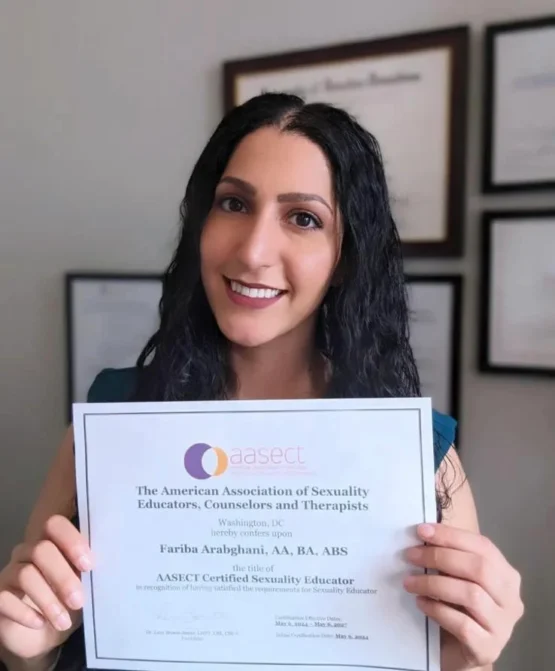
My professional work in this area is informed by my training as an AASECT Certified Sexuality Educator and Board-Certified Sexologist, along with my specialization in BDSM, consensual non-monogamy, sexuality, disability, and neurodiversity.
Coaching can address education, communication, goal-setting, self-exploration, negotiation, and practical relationship skills. Psychotherapy should be provided by an appropriately licensed mental health professional when treatment of a clinical condition or significant psychological distress is needed.
Who Might Benefit From a Polyamory and Kink Coach?
You do not need to be both highly experienced in polyamory and deeply involved in BDSM to seek this kind of support.
Someone considering non-monogamy for the first time may want help understanding how a kink dynamic could be affected. A long-term polyamorous person might be discovering submission and struggling to understand where authority fits within their other partnerships. An experienced kinkster may be opening a previously monogamous relationship.
A polyamory and kink coach can also be helpful for people who already have years of experience but are facing a situation their existing relationship tools do not address well.
The common thread is not experience level. It is wanting a structured place to examine relationships and sexuality that does not assume monogamy, vanilla sexuality, heterosexuality, cisgender identity, or one narrow model of what intimacy should look like.
Choosing a Polyamory and Kink Coach
Because coaching is not a single standardized profession, look carefully at the person providing the service.
Review their education, credentials, scope of practice, and actual experience with the communities or subjects relevant to you. Someone who describes themselves as polyamory-friendly may have very different knowledge from someone whose professional work regularly addresses consensual non-monogamy.
The same applies to BDSM. A coach should understand enough about kink to distinguish Tops from Dominants, recognize the importance of negotiated authority, discuss consent without relying on simplistic slogans, and know when a technical activity requires education outside the coaching relationship.
Ask what happens in sessions and where the practitioner’s boundaries are. A polyamory and kink coach should be able to explain when an issue belongs with a therapist, physician, technical BDSM educator, attorney, or another professional instead.
The right coach does not need to share every identity or relationship structure you do, but they should be capable of working with your life without treating it as a problem that needs to be normalized.
Polyamory and Kink Coaching Is About Creating More Intentional Choices
What interests me most about the overlap between polyamory and kink is not that either one has discovered a superior way to have relationships. Both simply create opportunities to ask questions that conventional relationship scripts sometimes allow people to avoid.
Who gets to make this decision? What have we actually agreed to? Which parts of this relationship are exclusive? What does this ritual mean to us? Who does this rule affect? What information does another person need? What happens when someone’s desires change? Which expectations are ours, and which did we inherit without ever choosing them?
Working with a polyamory and kink coach gives you somewhere to examine those questions without assuming that there is one correct form of non-monogamy, one authentic way to practice BDSM, or one relationship structure you are supposed to build.
The goal is not to make every partner equally important, eliminate jealousy, become endlessly compersive, or develop perfectly efficient agreements. Real relationships are too complicated for that.
The goal is to become clearer about what you are choosing and why, communicate those choices more effectively, and make room for the people affected by them to make informed choices of their own.
If you want support applying those ideas to your relationships, you can book a Coaching Action Plan Session. You can also download my Negotiation Checklist if you want a structured tool for discussing desires, boundaries, and BDSM activities with a partner.