
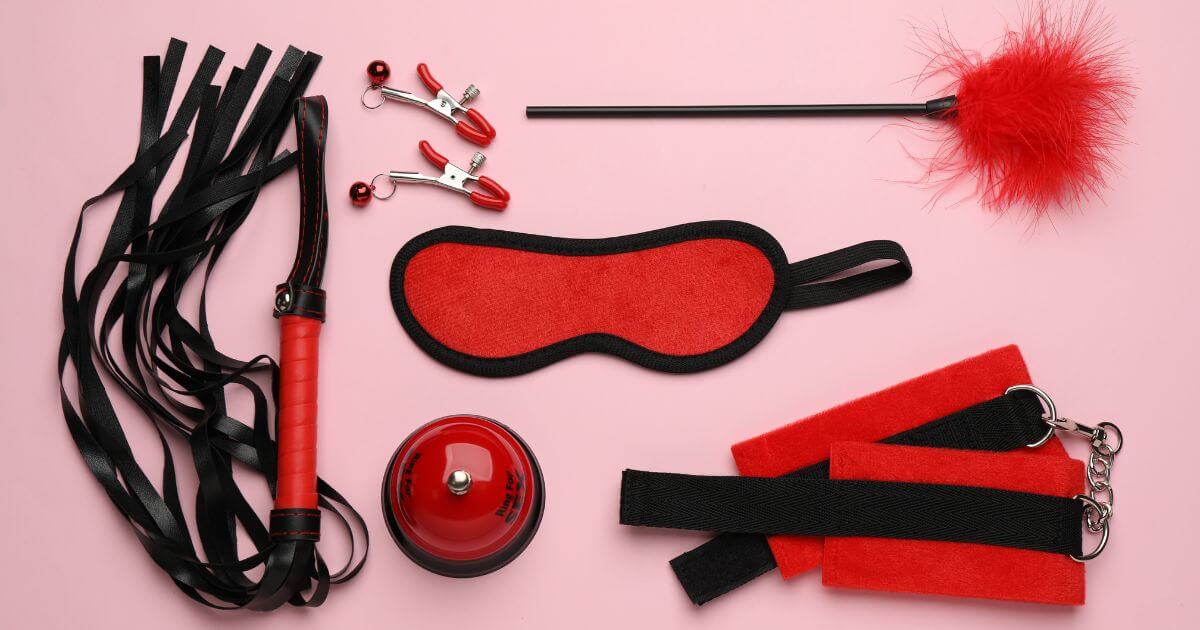
Curiosity may be what brings you to kink, but education is what helps you explore it with more confidence, skill, and awareness. BDSM classes can give you a structured place to learn about consent, negotiation, risk, technique, communication, and the many different ways people practice BDSM.
Good BDSM classes are not simply demonstrations of rope knots, floggers, or restraints. They should also help you understand why a technique works, what can go wrong, how to communicate before and during play, and how to make decisions based on your own boundaries and risk tolerance. Whether you are completely new to BDSM or looking to deepen skills you already have, education can make your exploration more intentional.
You also do not need to identify as kinky, have a partner, or know exactly what role you want before attending BDSM classes. Plenty of people take classes because they are curious, want to better understand a partner’s interests, or simply want reliable information before deciding whether BDSM is something they want to explore.
Table of Contents
What Are BDSM Classes?
BDSM classes are educational experiences focused on bondage, discipline, Dominance and submission, sadism and masochism, consent, risk awareness, communication, and other aspects of kink. Some sessions focus heavily on practical techniques, while others are discussion-based and center relationship dynamics, ethics, identity, or psychological play.
A beginner workshop might cover terminology, safewords, negotiation, limits, aftercare, and basic risk awareness. More specialized classes may focus on rope bondage, impact play, service, orgasm control, sensory play, Dominant skills, submissive skills, or a particular type of scene. Reading the description carefully can help you figure out whether a class matches your experience level and goals.
If you are still learning the vocabulary, my guide to what BDSM stands for is a useful place to start before moving into more specialized kink education.
Why BDSM Education Matters
A lot of people first encounter kink through pornography, fiction, social media, movies, or conversations with friends. Those sources can inspire curiosity, but they are not necessarily designed to teach anatomy, consent, risk reduction, or technique.
BDSM classes create a space to learn not only what people do, but why certain practices require additional care. That distinction matters because many activities can create physical, emotional, or psychological risks that are not obvious when you are only watching someone else perform them.
For example, seeing rope bondage does not teach you where major nerves are located, how to recognize circulation or nerve problems, or what to do if someone needs to be released quickly. Watching impact play does not automatically teach you safer striking areas, how different implements distribute force, or how to control intensity.
Quality BDSM classes can also help correct misinformation before it becomes part of your practice. Kink communities contain traditions, opinions, and personal preferences that are sometimes presented as universal truths. A good educator should help you distinguish between established safety considerations, community customs, and their own preferred approach to play.
What Good BDSM Classes Should Teach
Technique matters, but some of the most valuable lessons happen around the activity itself. Learning how to negotiate, identify boundaries, ask useful questions, recognize when something changes, and decide when you do not have enough information to proceed can be more important than memorizing a particular knot or strike.
You may also encounter different frameworks for thinking about consent and risk. SSC stands for Safe, Sane, and Consensual, RACK stands for Risk-Aware Consensual Kink, and PRICK stands for Personal Responsibility, Informed Consensual Kink. These frameworks offer different ways of approaching decision-making, but neither can replace communication, judgment, or an understanding of the specific activity you are considering.
The strongest BDSM classes encourage critical thinking rather than obedience to the instructor. You should leave understanding the principles behind what you learned, not believing there is only one correct way to practice kink.
Types of Kink Classes You Might Encounter
Modern BDSM education covers a huge range of subjects, from broad beginner introductions to highly specialized workshops. Choosing the right class depends on what you want to learn, how you prefer to learn, and how much experience you already have.
Beginner BDSM Classes
Beginner BDSM classes usually focus on foundational information such as terminology, negotiation, safewords, limits, aftercare, basic risk awareness, and common types of play. These classes can be useful even if you have no idea which activities interest you yet.
Starting with foundational education can also take some pressure off choosing an identity immediately. You do not have to decide whether you are a Dominant, submissive, Top, Bottom, or Switch before you understand what those terms actually mean in practice. Learning first can give you room to explore without trying to fit yourself into a label prematurely.
Bondage and Rope Education
Bondage workshops may cover basic knots, cuff placement, floor bondage, body mechanics, suspension, decorative rope, or rope-related risk. Beginner instruction should include anatomy and safety alongside technique because knowing how to tie a knot is only one part of responsible bondage.
More advanced workshops involving suspension or other higher-risk bondage should clearly explain the experience expected of participants and the safety knowledge the instructor assumes students already possess. A class labeled advanced should not have to spend most of its time reteaching foundational skills that participants were expected to bring with them.
Impact Play Workshops
Impact play education may cover spanking, floggers, paddles, canes, crops, or other implements. Good workshops usually address anatomy, body positioning, targeting, intensity, warm-up, and how different tools behave.
An instructor should teach control rather than simply demonstrate how hard they can hit. Students need to understand how to handle an implement, recognize safer and higher-risk areas of the body, communicate about sensation, and gradually build intensity. BDSM classes on impact play should give you information you can apply beyond copying the instructor’s exact movements.
Dominance and Submission Education
Not all kink education is primarily physical. D/s classes may explore authority, protocols, service, communication, rituals, expectations, accountability, and relationship structure.
These classes can be particularly useful because popular media often suggests that Dominants simply know what to do while submissives simply obey. Healthy D/s dynamics are generally much more intentional than that. Negotiating authority requires communication about what authority is actually being transferred, where its limits are, and how accountability works within the relationship.
BDSM classes focused on D/s can also help people distinguish between Dominant and Top or submissive and Bottom. These roles may overlap, but they do not automatically describe the same type of relationship or activity.
Consent and Negotiation Classes
Consent-focused BDSM classes are useful at every experience level. Experienced kinksters still encounter new partners, new activities, changing bodies, and situations that require different conversations.
Negotiation education may cover limits, desired activities, intensity, sexual contact, emotional triggers, safer sex practices, aftercare, and what should happen if someone needs to stop. Good instruction can also help you move beyond vague questions such as “What are your limits?” and toward questions that are actually specific to the scene you are planning.
Learning how to negotiate is useful even when you already know the physical technique. The same activity can require very different conversations depending on the people involved.
Specialized BDSM Education
You may also find workshops on sensation play, psychological play, humiliation, service, pet play, orgasm control, wax play, medical play, chronic pain and BDSM, neurodivergence and negotiation, disability-inclusive kink, or many other specialized subjects.
The more specialized the topic becomes, the more important it is to evaluate whether the educator has relevant expertise. A person may be highly knowledgeable in one area of BDSM without being equally qualified to teach every other type of play.
Online BDSM Classes vs. In-Person Learning
Both online and in-person education can be valuable. The better format depends on the subject, your access needs, your comfort level, and how you learn best.
Virtual BDSM Education
Online BDSM classes have made kink education much more accessible. You can learn from educators in different cities or countries without paying for travel, navigating an unfamiliar venue, or depending entirely on what happens to be available in your local community.
Virtual learning can be particularly useful if you live in a rural area, have mobility limitations, experience social anxiety, are not publicly out as kinky, or simply prefer learning privately. Online courses are also well suited to consent, communication, D/s dynamics, relationship structure, and other topics that do not require physical correction from an instructor.
Some online programs are recorded, while others are taught live. Recorded education allows you to pause, take notes, or revisit the material later. Live BDSM classes can give you the opportunity to ask questions and hear how an educator responds to situations that were not specifically covered in their prepared material.
The primary limitation is that some physical techniques are difficult to evaluate from a distance. Watching a rope or impact demonstration online does not necessarily allow an educator to see what you are doing differently when you try it yourself.
In-Person BDSM Education
In-person BDSM classes can be particularly useful for techniques where immediate feedback matters. An instructor may notice that your rope placement is too close to a vulnerable area, your body mechanics are inefficient, or your implement control is inconsistent.
Depending on the workshop, participants may also have opportunities to practice with a partner or on equipment. That should always be explained clearly before registration, including whether participation is optional and whether you are expected to bring a partner.
In-person education can also introduce you to local educators, organizations, venues, and community members. That social element can be useful if you are interested in becoming more involved in a local kink community.
Attending a class does not obligate you to play with anyone, exchange contact information, accept invitations, or become involved in the community beyond the educational experience.
Do You Need a Partner to Attend?
No. Many BDSM classes are appropriate for people attending alone. Discussion-based classes generally do not require a partner at all, and some technical workshops provide ways for people to observe, practice on themselves, use equipment, or pair up voluntarily.
If partner practice is required, that should be disclosed before registration. Signing up alone should not result in you unexpectedly being expected to practice intimate techniques with someone you have never met.
Attending by yourself can actually be helpful because it allows you to focus entirely on your own interests and questions instead of simultaneously managing a partner’s experience.
What to Expect at Your First BDSM Class
Your experience will depend on the instructor and topic, but most well-organized BDSM classes begin by explaining the format, participation expectations, and basic ground rules.
An instructor may introduce themselves, explain their background, describe what will be covered, and clarify whether the session includes demonstrations or hands-on practice. They may also explain photography rules, privacy expectations, accessibility information, and how questions will be handled.
If demonstrations are included, participation should be consensual and clearly structured. A professional educator should not pressure students to volunteer, remove clothing, receive touch, or participate in an exercise they do not want.
You also do not have to disclose intimate details about your own sex life simply because you are attending a kink class. Educational environments should allow you to learn without requiring personal disclosure as the price of admission.
How to Find Reputable BDSM Classes
Finding BDSM classes is easier than it used to be, but evaluating the quality of those classes still requires judgment. Start by researching the educator rather than relying only on the title of the event.
Look at their professional biography, teaching history, specialization, and how they describe their approach to consent and risk. Someone can have decades of personal kink experience and still be a poor educator. Likewise, having a large social media following does not automatically mean someone understands anatomy, teaching methodology, or ethical facilitation.
Reputable BDSM classes should make it reasonably clear who the class is designed for, what participants will learn, what experience level is expected, and whether the session includes hands-on activities.
If you are unsure how to assess kink information more generally, my guide to finding trustworthy sources of BDSM education can help you evaluate both educators and online resources.
Questions to Ask Before Registering
Before you sign up, look at the information provided by the instructor or organizer. If important details are missing, it is completely reasonable to ask questions.
You may want to know whether the class is appropriate for beginners, whether demonstrations involve nudity, whether hands-on participation is expected, whether a partner is required, whether you need to bring equipment, and what accessibility accommodations are available.
For technical workshops, you may also want to ask about the instructor’s specific experience with the activity rather than relying on their general background in kink. Someone who has been practicing BDSM for twenty years may still have only limited experience with the particular technique they are teaching.
A responsible educator should be able to answer reasonable questions about their class without treating safety or consent concerns as an inconvenience.
Red Flags When Choosing a BDSM Educator
Not every person teaching BDSM classes is someone you should trust. Kink communities do not have one universal licensing system for educators, so students need to evaluate instructors critically.
Be cautious of educators who claim their method is the only correct way to practice BDSM, dismiss legitimate risks, ridicule beginners, mock people’s limits, or frame consent concerns as evidence that someone is not “really kinky.” Confidence in an instructor is not the same thing as unquestionable authority.
Another red flag is an instructor who uses the classroom environment to pressure students into personal relationships, play, sex, or private interactions. Teaching kink does not entitle someone to sexual or social access to the people who attend their workshops.
It is also reasonable to be skeptical of anyone who refuses to acknowledge the limits of their knowledge. A rope educator does not automatically understand every form of psychological play, and a Dominance educator is not automatically qualified to give medical advice. Good education should make you more capable of evaluating information and making your own decisions.
Inclusivity Matters in BDSM Education
BDSM is practiced by people with different bodies, identities, cultures, abilities, genders, sexual orientations, and relationship structures. BDSM classes should reflect that reality rather than presenting one kind of body or relationship as the default.
Anatomy discussions should acknowledge that bodies differ. Advice about positioning should not assume everyone has the same mobility. Conversations about power should be capable of recognizing that race, gender, disability, class, and other social realities may influence how people experience authority and vulnerability.
Inclusive education also avoids assuming that everyone in the room is heterosexual, cisgender, monogamous, able-bodied, neurotypical, or interested in sexual activity. The examples an educator uses can tell you a great deal about who they imagine belongs in their classroom.
An instructor does not need to personally share every identity represented by their students. They should, however, be able to teach without treating anyone outside their own experience as an inconvenient exception.
Accessibility and the Learning Environment
Accessibility is another important consideration when choosing a class. Online BDSM classes can remove some barriers, but accessibility involves much more than whether someone can physically enter a building.
Class length, seating, sensory environment, lighting, captioning, breaks, communication style, and expectations around participation can all affect whether someone is able to meaningfully engage with the material.
If you have specific access needs, contacting the organizer beforehand can help you determine whether the event will work for you. A thoughtful educator may not be able to accommodate every possible need, but they should be willing to give you accurate information so you can make your own decision.
Accessibility should not be treated as separate from good education. Students learn better when they can actually access the material and environment in which it is being taught.
How to Prepare for Your First Class
You usually do not need much equipment before attending BDSM classes for the first time. Read the event description carefully because organizers should tell you if specific supplies are required.
For a discussion-based class, a way to take notes and something to drink may be all you need. Technical workshops may ask participants to bring rope, an impact implement, safety equipment, or another specific item.
Dress for the venue and activity instead of assuming that BDSM education requires fetishwear. Many classes are casual. Comfortable clothing may be considerably more practical if the workshop involves movement, floor work, or practicing techniques.
It can also help to arrive with a few questions in mind. Think about what you hope to understand by the end of the class. You may discover entirely new questions once the instructor begins teaching, but starting with an intention can help you focus on the material that matters most to you.
You Do Not Have to Practice Everything You Learn
One of the benefits of structured BDSM education is that you can learn about an activity without committing to trying it. You may attend a workshop and decide the activity is not for you, and that is still useful information.
Education can help you make a more informed no just as easily as it can help you make a more informed yes. Sometimes understanding the risks, sensations, equipment, or logistics of an activity makes it less appealing. Other times, BDSM classes introduce possibilities you had never considered before.
Curiosity does not create an obligation to participate. Learning about kink can simply be learning.
BDSM Classes Do Not Make Kink Risk-Free
Good BDSM classes should be honest about risk. Education can help you reduce certain risks, improve technique, and recognize warning signs, but it cannot make every BDSM activity completely safe.
Different practices involve different concerns. Rope can create nerve compression or circulation problems. Impact play may cause bruising or other injury. Psychological play can have emotional effects that may be harder to predict than physical marks.
The purpose of good kink education is not to promise that nothing can go wrong. It is to help you understand what could happen, recognize warning signs, make more informed decisions, and prepare for problems if they occur.
Be cautious of instructors who describe inherently risky activities as completely safe simply because a particular technique is performed correctly.
What About Trauma-Informed Kink Education?
The phrase trauma-informed is increasingly common in sexuality education, but it is worth asking what an educator actually means when they use it.
A BDSM educator is not automatically a trauma therapist, and educational classes should not be presented as treatment for trauma unless the person providing that treatment is appropriately qualified.
Within BDSM classes, trauma awareness might involve giving participants choices, explaining what will happen before it happens, avoiding unnecessary pressure to disclose personal experiences, respecting opt-outs, and recognizing that people may respond differently to sensitive material.
If you know a particular subject is likely to be difficult for you, reviewing the class description and contacting the educator beforehand may help you decide whether the environment is appropriate for you.
How Much Does BDSM Education Cost?
The cost of BDSM classes varies widely. Community groups may offer free or inexpensive workshops, while independent educators may charge for webinars, multi-hour intensives, private instruction, or multi-day conferences.
Price alone does not determine quality. An expensive class is not automatically more authoritative, and a low-cost community workshop is not automatically less valuable.
Consider the educator’s expertise, the amount of instruction provided, class size, materials, and whether the format matches the way you learn. A highly specialized hands-on workshop with a small class may reasonably cost more than a large introductory lecture.
If cost is a barrier, look for educators who offer sliding scales, scholarships, recorded education, community workshops, or lower-cost virtual options.
Can You Learn BDSM Entirely Online?
You can learn a great deal through online BDSM classes, books, articles, and virtual communities, particularly when it comes to consent, communication, relationships, terminology, and foundational risk awareness.
Some physical skills, however, benefit from in-person instruction and feedback. It can be difficult to evaluate your own rope placement, body mechanics, striking technique, or positioning from a video alone.
A blended approach often works well. You might use online education to understand theory and then attend an in-person workshop when you are ready to practice a technical skill under supervision. Which format makes sense can change depending on the subject.
Education Is Not a Substitute for Practice
Attending BDSM classes gives you information. It does not automatically give you mastery.
After a class, take time to practice at an appropriate level. That might mean rehearsing communication scripts, practicing knots on yourself or an appropriate object, working on implement control without striking another person, or discussing a hypothetical scene with a partner.
Technical skills develop through repetition, while interpersonal skills develop through communication and experience. Neither improves simply because you watched an expert demonstrate something once.
The goal is not to leave one class and immediately attempt the most advanced version of what you saw. Give yourself room to practice foundational skills before adding more intensity or complexity.
Continuing Your BDSM Education
BDSM education works best as an ongoing process. Even experienced kinksters continue learning because bodies change, relationships change, techniques evolve, and no individual can know everything about every form of play.
Once you have taken foundational BDSM classes, consider learning across different areas instead of focusing exclusively on technique. Someone who is highly skilled with rope can still benefit from a negotiation workshop. A confident Dominant can still learn more about accessibility, communication, consent, or aftercare.
Learning from multiple educators can also expose you to different philosophies and methods. This can help prevent one person’s preferences from becoming your entire understanding of BDSM.
Books, conferences, workshops, peer discussions, private coaching, and online education can all become part of continuing education. The more thoughtful sources you encounter, the better equipped you are to compare information and decide what makes sense for your own practice.
Frequently Asked Questions About BDSM Classes
Are BDSM Classes Only for Beginners?
No. BDSM classes exist at every experience level. Beginner education tends to cover foundational subjects, while advanced workshops may explore specialized techniques, complex relationship dynamics, or activities with more significant risks.
Experienced kinksters can also benefit from revisiting foundational subjects. Consent, negotiation, communication, anatomy, and risk awareness are not topics anyone permanently graduates from.
Do I Have to Participate in Demonstrations?
No one should pressure you to participate simply because you registered for a class. If a workshop includes demonstrations or hands-on practice, the organizer should explain how participation works before the activity begins.
Observation should generally remain an option unless the class was explicitly advertised as a workshop requiring active participation. You retain your boundaries in educational spaces just as you do anywhere else.
Will a Class Tell Me Whether I Am a Dominant or Submissive?
A good educator should not assign you a BDSM identity. Classes can help you understand different roles and give you questions to consider, but only you can decide whether a particular label describes your experiences.
You may also discover that your interests change depending on the activity, partner, or relationship. There is no requirement that you choose one permanent BDSM role.
Are Online BDSM Classes Worth It?
Yes, particularly for subjects such as consent, communication, D/s relationships, negotiation, and foundational education. Virtual courses can also give you access to educators whose work would otherwise require substantial travel.
For technical activities, online learning may be most useful when combined with appropriate practice or in-person instruction.
Are BDSM Classes Sexual?
They may discuss sexual subjects, but attending a class does not mean you are agreeing to participate in sexual activity.
Most BDSM classes are exactly what they claim to be: educational experiences. Some may include demonstrations involving nudity, touch, or BDSM activities, but those details should be made clear before you register so you can decide whether you are comfortable attending.
Can I Attend if I Am Not Sure I Am Kinky?
Absolutely. You do not need to claim a particular identity in order to learn.
BDSM classes can help you decide whether particular activities or dynamics interest you. Learning about something and deciding it is not for you is just as valid as discovering a new interest you want to explore.
Finding the Right BDSM Classes for Your Journey
BDSM classes can give you something casual internet browsing often cannot: context. Instead of simply seeing a technique, you can learn about the consent, anatomy, communication, preparation, risks, and decision-making that surround it.
That education can be valuable whether you are preparing for your first scene or have been practicing BDSM for years. The goal is not to collect proof that you are kinky enough. It is to continue developing the knowledge and judgment necessary to explore in ways that align with your boundaries, values, and desired level of risk.
Look for BDSM classes taught by educators who are transparent about their expertise, honest about risk, respectful of consent, and willing to acknowledge that different people practice BDSM differently. Good education should leave you more capable of making your own informed decisions rather than more dependent on someone else’s authority.
If you are ready to keep learning, you can explore my upcoming BDSM classes and workshops to find a topic that matches your interests and experience level.