Table of Contents
The Best Lube for Sex: A Complete Personal Lubricant Guide by Type of Play
If you have ever asked me which lube I recommend, you have probably heard me answer with another question: what are you using it for?
There is no single personal lubricant that is best for every body, toy, barrier, and type of play. The lube I would recommend for vaginal penetration may not be my first choice for anal sex. The product that works beautifully with a glass dildo may be a poor match for an expensive silicone toy. A lubricant that lasts through shower sex may be incompatible with the latex condoms in your nightstand.
This is why I rarely recommend lube based on brand alone.
Choosing a personal lubricant is really about matching the formulation to the job. You need to consider where it is being used, how much friction the activity creates, whether condoms or barriers are involved, what your toys are made from, how sensitive your tissues are, and whether there are additional considerations such as vaginal dryness, recurrent irritation, fertility, disability, hormonal changes, or prolonged play.
There is also more science behind lube than most people realize. Water-based lubricants can differ significantly in pH and osmolality. Silicone lubricants behave very differently from water-based products. Oil-based lubricants introduce their own compatibility concerns, and a label that says “natural,” “organic,” “warming,” or “for women” tells you surprisingly little about whether the product is actually a good fit for your body.
This guide is the long version of the answer I give when someone asks me for a lube recommendation. We are going to look at the major types of personal lubricant, what pH and osmolality actually mean, condom and toy compatibility, and the lubes I would reach for depending on the type of play.
One important note before we start: needing lube does not mean you are not aroused enough. Natural lubrication varies with hormones, medications, stress, hydration, age, anatomy, disability, menstrual cycle, menopause, testosterone use, how long you have been having sex, and countless other factors. You can also be extremely aroused and simply prefer more glide. Using personal lubricant is not evidence that your body has failed at sex.
My Short Answer: Which Personal Lubricant Should You Buy?
If you came here because you need an answer before tonight rather than a graduate seminar on lubricant chemistry, here is the short version.
For the broadest compatibility, I usually recommend starting with a high-quality water-based personal lubricant. Water-based formulas work with most condoms and barriers, are generally the safest choice for silicone toys, clean up easily, and come in everything from thin liquids to thick gels.
For vaginal use, I prefer a water-based personal lubricant that publishes its pH and, ideally, osmolality. Products formulated relatively close to vaginal conditions are particularly worth considering if you experience sensitivity or irritation. Current WHO and UNFPA guidance treats osmolality and pH as important formulation considerations for water-based lubricants, with lower-osmolality products preferred.
For long sessions, anal penetration, handjobs, or shower play, silicone lubricant is often excellent because it stays slippery much longer and does not wash away easily. The major caveat is silicone toys: check the toy manufacturer’s compatibility guidance before combining a silicone lubricant with a silicone toy.
If latex or polyisoprene condoms are involved, skip oil-based personal lubricant. Oils can weaken those materials and increase the chance of barrier failure. Water-based and silicone-based products are generally the safer options, although the individual condom and lubricant manufacturer’s directions should always win.
If you are trying to conceive, use a lubricant specifically evaluated for sperm compatibility rather than assuming your everyday lube is fertility-friendly.
Those are the basics. Now we can get nerdy.
What Does Personal Lubricant Actually Do?
At its simplest, personal lubricant reduces friction.
That matters because friction can affect both comfort and tissue. A good lubricant can make penetration easier, make repetitive stimulation more comfortable, reduce irritation from rubbing, improve the feel of condoms and toys, and allow some activities to continue longer without tissues becoming increasingly dry or irritated.
The World Health Organization includes lubricants among interventions supporting sexual functioning and well-being, and a recent clinical review concluded that lubricant use can benefit a wide range of people, particularly those using condoms or experiencing dryness, discomfort, or sexual dysfunction.
But friction reduction is not the only thing that distinguishes one personal lubricant from another.
A formula may be thin or thick, absorb quickly or remain slick, rinse away with water or resist it, interact with condoms or toys, have a particular pH, and contain dissolved ingredients that affect its osmolality.
Those differences are why I care less about finding the universally “best lube” and more about finding the right personal lubricant for the activity.
The Three Main Types of Personal Lubricant
Most lubes fall primarily into three categories: water-based, silicone-based, and oil-based. Hybrid formulas combine characteristics of more than one category.
Understanding the base gets you surprisingly far when choosing a personal lubricant.
Water-Based Personal Lubricant
Water-based lube is the all-purpose workhorse.
It tends to feel closer to naturally occurring moisture, rinses away easily, usually works with condoms, and is generally compatible with a broad range of sex toy materials. If you want one bottle of personal lubricant that can handle a lot of different situations, water-based is usually where I would begin.
The downside is longevity. Water evaporates and absorbs, so water-based lubricant may become tackier or dry out during longer play. You can add more, or sometimes reactivate what is already there with a little water.
Water-based does not automatically mean gentle, however. Two water-based products can have dramatically different formulations. This is where pH and osmolality become important.
Among the water-based products I currently like are Sliquid H2O, Good Clean Love BioNude, and AH! YES WB. Sliquid H2O is a relatively simple water-based formula without glycerin or propylene glycol and lists a pH of 4.0 to 4.4. Good Clean Love currently lists BioNude at pH 4.0 to 4.4 with an osmolality of approximately 251 to 400 mOsm/kg. AH! YES WB is marketed as iso-osmotic and vaginal-pH matched and publishes a relatively short ingredient list.
I would consider any of those reasonable starting points for vaginal use, toy use, and general-purpose sex depending on your body’s preferences.
Silicone-Based Personal Lubricant
Silicone lubricant behaves very differently.
Because it does not contain water, it does not evaporate the way water-based lubricant does. A small amount can remain slippery for a surprisingly long time, which makes silicone particularly useful for prolonged penetration, anal sex, handjobs, sex in water, and people who are tired of stopping every few minutes to reapply lube.
Silicone is also generally compatible with natural rubber latex condoms, but always check the particular product. Überlube, for example, states that it is compatible with natural rubber latex and polyisoprene condoms but specifically says it is not compatible with polyurethane condoms. That is a good example of why “silicone is condom-safe” should not replace reading the packaging.
Silicone personal lubricant also does not have a meaningful aqueous pH or osmolality in the way a water-based product does because there is no water phase.
The major compatibility question involves silicone toys.
Some silicone lubricants can interact with some silicone toy materials, potentially causing swelling, tackiness, or surface degradation. This is not as simple as “silicone always destroys silicone,” because formulations and toy materials differ. Even Überlube advises checking the manufacturer’s guidance and testing an inconspicuous area if compatibility is uncertain.
If I spent a lot of money on a silicone toy and the manufacturer does not explicitly approve silicone lubricant, I use water-based lube.
Oil-Based Personal Lubricant
Oil-based personal lubricant gives you long-lasting slip and can work particularly well for external touch, masturbation, massage, and water play.
Oil also introduces one very important limitation: it can damage latex.
CDC guidance specifically warns against using petroleum jelly, mineral oil, massage oils, body lotions, cooking oils, and other oil-based products with latex condoms because oil can weaken the material and contribute to breakage.
Polyisoprene barriers can also have oil restrictions, so I would not assume that “non-latex” automatically means oil-compatible. Check the packaging for the actual barrier you are using.
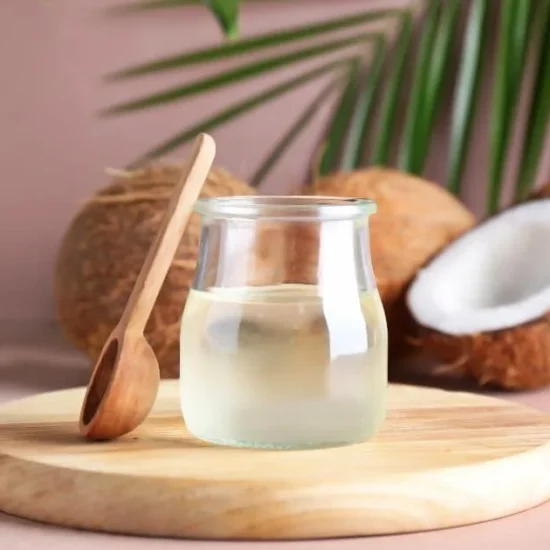
Oil-based lube may be appealing because it lasts a long time, but vaginal safety data for oils are less robust than the data we have for purpose-formulated water-based lubricants. If you are thinking specifically about coconut oil, I have an entire article on whether you can use coconut oil as lube.
I am not categorically anti-oil. I simply do not treat something as an ideal genital lubricant because it happens to be edible or “natural.”
What About Hybrid Lube?
Hybrid personal lubricant usually combines a water base with a smaller amount of silicone.
The goal is to get some of the easy cleanup and tissue hydration associated with water-based products while extending the glide with silicone.
This can be a lovely middle ground for people who find ordinary water-based lubricant disappears too quickly but do not want the full feel or cleanup of pure silicone.
Good Clean Love’s current Hybrid formula, for example, combines water, hydroxyethylcellulose, hyaluronic acid, dimethicone, and other ingredients. The manufacturer lists its pH at 4.0 to 4.4 and osmolality between 250 and 400 mOsm/kg.
Because hybrids contain silicone, I still check compatibility before using one with a silicone toy.
Why Osmolality Matters in Water-Based Lube
Osmolality is one of the topics that makes people immediately regret asking me about lube, but it is important.
In very simplified terms, osmolality measures the concentration of dissolved particles in a liquid.
Your tissues contain water. A very hyperosmolar personal lubricant has a much higher concentration of dissolved material than the cells it contacts, which can draw water out of epithelial cells.
WHO and UNFPA guidance notes that vaginal secretions are roughly 260 to 370 mOsm/kg and states that an ideal lubricant would stay at or below approximately 380 mOsm/kg. Because many commercial lubricants historically far exceeded that number, WHO has used 1,200 mOsm/kg as a more practical upper procurement threshold.
Laboratory studies have found associations between increasing lubricant osmolality and epithelial damage or reduced barrier integrity.
That does not mean one use of a hyperosmolar lubricant guarantees tissue damage or infection. Human bodies and laboratory models are not interchangeable.
It does mean that when I have two water-based products that perform equally well and one has a substantially more body-similar osmolality, I have a reason to prefer the latter.
This is particularly relevant if someone experiences frequent irritation, dryness, or discomfort.
Does Glycerin Make a Lube Bad?
Not automatically.
This is an area where internet lube advice often becomes much more categorical than the science supports.
Glycerin and propylene glycol are small molecules that can contribute substantially to a water-based lubricant’s osmolality, particularly when present at higher concentrations. UNFPA specifically identifies glycerol and propylene glycol as common contributors to high-osmolality formulations.
That makes concentration and overall formulation more useful information than simply spotting the word glycerin on an ingredient list.
Some people also personally find glycerin-containing products irritating or notice that certain formulas do not work well for them. If you know your body dislikes glycerin, choosing glycerin-free personal lubricant makes perfect sense.
What I would not do is tell everyone with a vagina that any amount of glycerin automatically causes yeast infections. The relationship is more complicated than that.
I care more about the complete formulation, osmolality, pH, and how the person’s body responds.
Why pH Matters
Water-based personal lubricant also has a pH.
The vaginal environment is normally acidic, commonly around pH 3.8 to 4.5, while rectal conditions are much closer to neutral. WHO has historically suggested approximately pH 4.5 for primarily vaginal lubricant and roughly 5.5 to 7 for products intended primarily for anal use or general distribution.
More recent WHO and UNFPA guidance also emphasizes buffering capacity. A lubricant that strongly resists changes in its own pH can affect local conditions differently from a product whose pH changes readily after contact with body fluids.
This is one reason I prefer brands that publish actual technical information instead of simply printing “pH balanced” on the front of the bottle.
Balanced to what?
A vaginal lubricant and a rectal lubricant do not necessarily have the same ideal target.
My Personal Lubricant Recommendations for Vaginal Penetration
For vaginal penetration, my first choice is usually a relatively body-similar water-based personal lubricant.
I want something without unnecessary fragrance or sensation additives, with a pH appropriate for vaginal use and preferably a published low or moderate osmolality.
Good Clean Love BioNude is one of my stronger recommendations for people who want a simple vaginal lubricant. The current formula is unscented and unflavored, with a published pH of 4.0 to 4.4 and osmolality of 251 to 400 mOsm/kg.
AH! YES WB is another option I like conceptually because it is marketed as vaginal-pH matched and iso-osmotic and does not contain glycerin.
Sliquid H2O is a good straightforward option when someone wants a relatively simple water-based personal lubricant that works with toys and barriers. Its current formulation lists purified water, plant cellulose, guar conditioners, sodium benzoate, potassium sorbate, and citric acid, with a pH of 4.0 to 4.4.
If your current lubricant feels good, does not cause irritation, and works with your condoms or toys, you do not need to throw it away because someone on TikTok found an ingredient they dislike.
Best Personal Lubricant for Anal Sex
Anal play is where lubricant stops being merely nice to have.
The anus does not produce the type of lubrication needed for comfortable penetration, so added personal lubricant is especially important for reducing friction. Planned Parenthood specifically recommends using plenty of lubricant for anal sex because friction can contribute to irritation and small tears.
For penis-in-anus sex without a silicone toy, I often like silicone personal lubricant because it lasts a long time and stays extremely slippery.
Überlube is one example. It contains dimethicone, dimethiconol, cyclomethicone, and vitamin E and is compatible with natural rubber latex and polyisoprene condoms according to the manufacturer, although not polyurethane condoms.
For anal toys made from silicone, I would usually switch to a thick water-based lubricant unless the toy manufacturer explicitly approves silicone lube.
Sliquid Sassy is a thick water-based gel that is compatible with silicone toys and condoms and does not contain numbing ingredients. One caveat is that its published pH is 4.1 to 4.4, which is closer to a vaginal target than the more neutral pH historically recommended for rectal-use lubricants. If you use anal lubricant frequently and are particularly concerned about tissue compatibility, I would prioritize a product that publishes both its rectal-use pH and osmolality rather than choosing solely because the bottle says “anal.”
Regardless of brand, anal lube should be generous. Add more when friction increases.
I also recommend avoiding numbing or desensitizing lubricant for anal play. Pain is useful information. If penetration hurts, slowing down, adding lubricant, changing angle or size, or stopping entirely is more useful than making the tissue harder to feel. Planned Parenthood likewise recommends stopping anal sex if it becomes painful or uncomfortable.
Best Personal Lubricant for Pegging
Pegging combines two different compatibility questions: anal tissue and the dildo.
If the dildo is silicone, my default recommendation is a thick water-based personal lubricant. You get toy compatibility without having to wonder whether a particular silicone lube will interact with the toy.
If the dildo is glass or stainless steel, silicone lubricant becomes an excellent option because those materials do not create the same silicone-on-silicone compatibility issue.
Either way, use much more than you think you need initially and reapply when the glide changes.
If you are experimenting with pegging as part of broader kink exploration, my guide to exploring new kinks covers how to approach unfamiliar activities with more intention.
Best Personal Lubricant for Butt Plugs and Anal Toys
The toy material decides much of this recommendation.
For silicone plugs and dildos, I usually choose water-based personal lubricant. A thicker gel is often easier because it stays where you put it instead of immediately running down your hand, toy, or sheets.
Sliquid Sassy is one example of that thicker texture.
For stainless steel, glass, or other confirmed silicone-lube-compatible materials, you have more flexibility. Silicone lubricant provides extremely durable slip, which can be helpful for prolonged anal play.
Whatever lube you use, anal toys should have a flared base or other retrieval-safe design. Planned Parenthood recommends a base or handle for toys used anally to prevent them from traveling too far into the rectum.
Best Personal Lubricant for Silicone Toys
Water-based is my default.
This is probably the simplest rule in the entire article.
A good water-based personal lubricant will work with silicone toys without making you research polymer chemistry while naked.
Silicone lubricant may be compatible with some high-quality silicone toys, but that depends on the specific materials involved. If the toy manufacturer explicitly says silicone lubricant is safe, follow their guidance. If they do not, I would rather use water-based lube than gamble with an expensive toy.
This also applies to hybrid personal lubricant because hybrid formulas may contain silicone such as dimethicone.
Best Personal Lubricant for Glass or Stainless Steel Toys
You have far more options here.
Water-based, silicone-based, and many oil-based personal lubricants can be compatible with nonporous glass and stainless steel, although you should still follow the toy manufacturer’s care instructions.
For short sessions, I usually stay with water-based because cleanup is easy.
For extended penetration, silicone is wonderful because it does not disappear quickly.
The toy does not need a specialty lubricant simply because it is made from metal or glass.
Best Personal Lubricant for Condoms and Barriers
For latex condoms, use a water-based or silicone-based personal lubricant that the manufacturer identifies as compatible.
Do not use oils, petroleum jelly, body lotion, cooking oils, massage oil, or other oil-containing products with latex. CDC guidance is explicit that oil can weaken latex and increase the chance of condom failure.
Polyisoprene condoms also commonly have oil restrictions, so check the specific package.
Polyurethane and nitrile behave differently, but compatibility can vary between specific products. This is one area where I do not rely on blanket statements from a lube guide. Read the condom or barrier packaging and the lubricant instructions.
Even silicone personal lubricant is not automatically compatible with every non-latex condom. Überlube, for example, specifically lists compatibility with latex and polyisoprene while advising against use with polyurethane condoms.
If you want the easiest compatibility answer, a condom-labeled water-based personal lubricant is usually my starting point.
Best Personal Lubricant for Handjobs and Penis Masturbation
For handjobs and penis-focused masturbation, staying power becomes more important because repetitive hand friction can make thin water-based lubricant disappear quickly.
Silicone personal lubricant is excellent here.
It stays slick, you need relatively little, and there is no silicone toy compatibility concern when the primary objects involved are hands and skin.
A hybrid personal lubricant can also be a great compromise if you want more lasting glide without the persistent feel of pure silicone.
Water-based lube still works perfectly well, especially if you prefer easy cleanup. You may simply need to add more periodically.
Best Personal Lubricant for Vulva and Clitoral Play
For external vulvar and clitoral stimulation, texture matters more than many people realize.
A very runny lubricant may migrate away from the area you are stimulating. A slightly thicker water-based gel often stays put better for fingers, external vibrators, and grinding.
If silicone toys are involved, water-based remains my default.
If the stimulation is entirely hands-on and you want something exceptionally silky, silicone can be lovely.
People with sensitive vulvar skin may want to skip warming, cooling, heavily flavored, or fragranced products and choose a simpler formula first.
There is no prize for making your genitals tingle because a manufacturer put peppermint or cinnamon in the bottle.
Best Personal Lubricant for Fisting and Large Toys
Fisting and very large insertables require substantial, sustained lubrication.
I want three things here: volume, viscosity, and longevity.
A thin water-based product that disappears quickly may become frustrating. A thicker water-based gel works better with silicone toys and can be reapplied generously. If toys are not involved or all materials are confirmed compatible, silicone provides exceptional staying power.
Do not use numbing products to make a larger object possible. Pain is not an inconvenience to chemically switch off so you can continue.
The goal should be enough preparation, arousal, relaxation, communication, gradual progression, and lubricant that the tissue can accommodate what you are doing comfortably.
If the body is telling you no, the answer is not stronger anesthetic.
Best Personal Lubricant for Shower Sex
Water and natural lubrication are not the same thing.
Shower water actually washes away many water-based lubricants and bodily fluids, which can make sex feel surprisingly friction-heavy.
This is where silicone personal lubricant shines. It is water-resistant and tends to remain slick during shower play.
Oil-based products can also resist water, but remember the condom compatibility issue.
One practical warning: silicone lube plus a shower floor can create a fantastic way to meet your local emergency department. Keep it off the floor and consider non-slip surfaces.
Best Personal Lubricant for Bath or Hot Tub Sex
The same general principle applies: water-based lubricant will tend to disperse.
Silicone personal lubricant is more persistent.
But I would separate “water play” from “hot tub chemistry.” Chlorinated water, heat, and other environmental factors can irritate some people’s genital tissue regardless of how good the lube is.
If something begins burning or feeling irritated, get out rather than adding more lubricant and hoping for the best.
Best Personal Lubricant for Oral Sex
You do not necessarily need flavored lube for oral sex.
A neutral, unflavored water-based lubricant can work perfectly well and avoids introducing extra flavors, fragrances, sweeteners, or sensation ingredients to tissues that may already be sensitive.
Good Clean Love specifically identifies BioNude as unscented and unflavored, while Sliquid H2O is also unflavored and unscented.
If flavored personal lubricant makes oral sex more enjoyable for you, use one designed for intimate use and pay attention to how your body responds.
I am less interested in policing every sweetener than in recognizing that novelty ingredients create more opportunities for someone to discover that their vulva hates novelty ingredients.
Best Personal Lubricant for Long Sex Sessions
Silicone is my first thought when someone says, “I need something that does not dry out.”
That could mean long intercourse, extended edging, prolonged hand stimulation, group sex, a long BDSM scene involving penetration, or simply someone whose preferred sexual pace lasts longer than their water-based lubricant does.
Überlube and other simple silicone formulations work well for this kind of situation, assuming all condoms and toys are compatible.
Hybrid personal lubricant is another option if you want more longevity than water alone without committing to a full silicone formula.
Best Personal Lubricant for BDSM Scenes
There is no special “BDSM lube.”
The activity decides the lubricant.
For pegging or anal penetration, use the principles we already discussed. For insertable toys, match the personal lubricant to the toy material. For extended masturbation, silicone may provide more longevity.
If your BDSM involves very specialized activities such as electrical play, medical play, or other practices requiring conductive or procedure-specific products, ordinary personal lubricant may not be the appropriate substance at all.
Use technical BDSM education specific to the activity rather than assuming a bottle labeled “lube” can safely substitute for any gel-like product.
My guide to finding trustworthy BDSM education explains how I evaluate technical kink information.
Best Personal Lubricant for Sensitive Vaginal Tissue
If someone tells me they have sensitive vaginal tissue, my recommendation becomes more conservative.
I usually begin with a simple water-based personal lubricant with appropriate vaginal pH, lower osmolality, and as few unnecessary sensation or fragrance ingredients as possible.
Good Clean Love BioNude fits those criteria particularly well on paper. Its published osmolality is approximately 251 to 400 mOsm/kg and its pH is 4.0 to 4.4.
AH! YES WB is another reasonable option based on its iso-osmotic and pH-matched formulation.
No personal lubricant is universally hypoallergenic or irritation-proof. If a product burns, itches, or consistently leaves you irritated afterward, stop using it.
And if you repeatedly experience burning, discharge changes, odor, pain, or presumed infections, do not keep cycling through new lubes indefinitely. Those symptoms deserve appropriate healthcare evaluation.
Personal Lubricant for Recurrent Yeast Infections or BV
This is another area where marketing frequently gets ahead of evidence.
A personal lubricant should not be advertised or treated as a treatment for bacterial vaginosis or a yeast infection.
What I can say is that vaginal pH, osmolality, additives, and individual sensitivity can influence how a lubricant interacts with the vaginal environment, and some people notice irritation or symptoms with particular formulas. Reviews of vaginal lubricants have highlighted the importance of physiologically appropriate pH and osmolality when choosing products for vaginal use.
If someone experiences recurring irritation, I would begin by simplifying the formula rather than chasing increasingly elaborate “feminine wellness” products.
An unscented, unflavored, relatively low-osmolality water-based personal lubricant is my usual starting point.
Recurrent infections deserve a clinician, not just a better bottle of lube.
Personal Lubricant During Perimenopause and Menopause
Hormonal changes can affect vaginal moisture and tissue, particularly during perimenopause and menopause.
Lubricant can reduce friction during sexual activity, but it is important to distinguish lubricant from vaginal moisturizer.
A personal lubricant is used around the time of sexual activity to provide immediate glide.
A vaginal moisturizer is designed for ongoing tissue hydration and is generally used on a schedule independent of sex.
Someone experiencing persistent vaginal dryness may benefit from both, depending on their needs. Reviews of genitourinary syndrome of menopause specifically distinguish lubricants used during sexual activity from moisturizers used for ongoing symptom management.
Persistent dryness, pain, burning, or tissue changes also deserve medical evaluation because there are additional treatment options beyond over-the-counter lubricant.
Personal Lubricant for People Taking Testosterone
Testosterone can contribute to genital and vaginal tissue changes for some transmasculine people, including dryness or discomfort with penetration.
A relatively gentle water-based personal lubricant can help reduce friction during sex, but persistent pain or tissue irritation should not simply be managed by adding more lube indefinitely.
Use the same principles I recommend for other sensitive vaginal tissue: consider pH, osmolality, ingredient simplicity, and your individual response.
If symptoms are persistent, a trans-competent healthcare professional can discuss additional options without treating your gender-affirming care as the problem.
What About Lube for Neovaginas?
There is no one universal recommendation because neovaginas can be constructed using different tissues and surgical techniques.
The pH, microbiome, moisture production, dilation requirements, and care needs may differ from those of a natal vagina and can also vary between procedures.
If you have a neovagina, follow the lubrication and dilation guidance provided by your surgical team, particularly during healing.
Once fully healed, lubricant choice can still depend on the type of play, toy material, barriers, and individual tissue response, but I would not assume that every recommendation designed around vaginal pH applies identically.
Best Personal Lubricant for Dilators and Pelvic Floor Therapy
For vaginal dilators, pelvic wands, or similar devices, I usually recommend a gentle water-based personal lubricant unless the device manufacturer directs otherwise.
Water-based lubricant works well with silicone devices and cleans off easily.
If the device is being used because penetration is painful, avoid numbing lubricants unless an appropriate clinician has specifically recommended one for a medical reason. Being able to feel your body’s response is important when gradually working with penetration.
If pain persists, worsens, or requires you to repeatedly override your body’s signals, that is a healthcare conversation rather than a lubricant problem.
Personal Lubricant When Trying to Conceive
If pregnancy is the goal, do not assume that every personal lubricant is sperm-friendly.
Research has shown that lubricant formulations can affect sperm motility and other sperm parameters in laboratory testing. A 2024 systematic review concluded that products differ substantially and noted that Pre-Seed generally demonstrated relatively little adverse impact on sperm compared with several conventional lubricants studied.
If you need lubricant while trying to conceive, choose one specifically marketed and tested for fertility compatibility rather than simply using whatever happens to be in the drawer.
Products such as Pre-Seed and fertility-specific formulas such as Good Clean Love Regenesis exist for exactly this reason.
“Natural” is not the same thing as sperm-friendly.
Is Saliva a Good Personal Lubricant?
Not really.
Saliva is convenient, but it dries quickly and is a poor substitute for a product designed to provide sustained lubrication.
It can also introduce oral microbes to genital tissue, and oral-genital contact has its own STI considerations.
For a quick external touch, people are obviously going to use spit sometimes. I am not interested in pretending otherwise.
For penetration or anything requiring sustained glide, actual personal lubricant performs substantially better.
Should You Use Lotion as Lube?
I would not.
Body lotions are formulated for external skin, not necessarily vaginal or rectal mucosa. They may contain fragrance, preservatives, active skincare ingredients, or other additives that are unpleasant on genital tissue.
They may also contain oils that are incompatible with latex barriers.
The same applies to random skincare products, petroleum jelly, hair products, and whatever else happens to be on the nightstand.
The fact that something is slippery is not the same thing as it being a well-designed personal lubricant.
What About Warming, Cooling, Tingling, or Stimulating Lube?
These are optional novelty products, not upgrades.
Some people genuinely love sensation lubricants. Other people apply them once and discover an immediate spiritual commitment to plain water-based gel.
Warming, cooling, and tingling effects generally come from additional ingredients designed to stimulate tissue. Those ingredients can also create irritation, particularly on sensitive mucosa.
If you want to experiment, try a small amount first and do not use sensation products as a way to override discomfort from penetration.
Burning is not always evidence that the lube is “working.”
What Ingredients Should You Avoid in Personal Lubricant?
I do not use a universal blacklist.
People’s bodies differ, formulations differ, concentrations matter, and internet ingredient discourse often turns nuanced questions into simplistic “toxic versus clean” categories.
Instead, I look for unnecessary ingredients first.
If someone is sensitive, I prefer fragrance-free and unflavored formulas. I am cautious with warming and cooling agents. I pay attention to glycerin and propylene glycol partly because they can contribute to high osmolality in water-based products, not because either ingredient is inherently poisonous.
I also avoid nonoxynol-9 as an ordinary lubricant ingredient. CDC notes that nonoxynol-9 can irritate vaginal and rectal tissue and is not recommended as a lubricant for HIV prevention.
What I care about most is whether the entire formulation suits its intended use.
“Natural” and “Organic” Do Not Automatically Mean Better
Coconut oil is natural.
Poison ivy is also natural.
The word tells you where something came from, not whether it is appropriate for a particular mucosal tissue, condom material, toy, or microbiome.
Organic certification may matter to you for environmental or personal reasons, but it does not substitute for information about pH, osmolality, barrier compatibility, or irritation.
Likewise, synthetic does not automatically mean dangerous.
Silicone personal lubricant is synthetic and also happens to be one of the most useful lubricant categories available.
Evaluate the formulation rather than the marketing identity.
Does More Natural Lubrication Mean More Arousal?
Not reliably.
Natural genital lubrication and subjective arousal do not always track perfectly.
Someone can be intensely turned on and not produce much lubrication. Someone else can have a physical lubrication response without wanting sex.
Medication, hormones, stress, menopause, testosterone, pregnancy, breastfeeding, disability, menstrual cycle, duration of activity, and ordinary human variation all affect moisture.
This is one reason I dislike jokes implying that someone needing personal lubricant must not be sufficiently attracted to their partner.
Lube is a sexual tool, not a report card on arousal.
And wetness is never consent.
How Much Personal Lubricant Should You Use?
Enough that friction feels good rather than irritating.
There is no universal teaspoon measurement.
For external stimulation, a small amount may be all you need. For anal penetration or larger toys, you may need considerably more.
Apply it before friction becomes uncomfortable rather than waiting until tissues are already irritated.
With water-based personal lubricant, reapply as needed or try adding a little water to reactivate what is already present.
If you are using condoms, a small amount can also be placed around the outside after the condom is on. Some guidance also allows a very small amount inside the tip for sensation, but too much inside may contribute to slippage.
My Current Personal Lubricant Recommendations
Product formulas can change, so these are recommendations based on the formulations available as of October 2026. Always check the current label and manufacturer guidance.
For an all-purpose water-based personal lubricant, I like Sliquid H2O. It has a short ingredient list, a published vaginal-range pH, and broad toy and barrier compatibility.
For sensitive vaginal tissue or someone who specifically wants published osmolality data, Good Clean Love BioNude is one of my strongest picks. Its current formula is unscented and unflavored, with a pH of 4.0 to 4.4 and osmolality around 251 to 400 mOsm/kg.
AH! YES WB is another strong vaginal option because the current formula is marketed as iso-osmotic, vaginal-pH matched, glycerin-free, and compatible with natural rubber latex and polyisoprene condoms.
For long-lasting silicone lubrication, I like the simplicity of Überlube. It has four listed ingredients and excellent staying power. Check your specific condom and toy compatibility before use.
For a thicker water-based gel, particularly when I want something that stays in place or I am using silicone toys, Sliquid Sassy is useful. It is thicker than Sliquid H2O while maintaining broad toy compatibility.
For a water-silicone hybrid, Good Clean Love Hybrid currently combines a low published osmolality and vaginal-range pH with a small amount of dimethicone for greater longevity.
I do not consider any of these universally superior. They simply represent different formulations that perform well for different needs.
How to Test a New Personal Lubricant
Do not debut a completely unfamiliar lube during the most complicated sexual event of your year.
Try a small amount during lower-stakes play first.
Notice texture, smell, taste if relevant, how quickly it dries, whether it becomes sticky, and how your skin and mucosa feel afterward.
If a product causes burning, itching, swelling, or persistent irritation, wash it off and stop using it.
Also remember that irritation may come from something other than the personal lubricant. Condoms, toys, soaps, detergents, friction, infections, hormonal changes, and skin conditions can all create genital symptoms.
If symptoms keep occurring, medical evaluation is more useful than endlessly rotating lube brands.
How to Store Personal Lubricant
Follow the manufacturer’s storage directions and expiration information.
Keep bottles closed and avoid contaminating the opening with dirty hands, toys, or bodily fluids.
If you decant lubricant into smaller containers for events, make sure those containers are clean and can be closed securely.
Do not keep an ancient half-open bottle in your play bag indefinitely simply because you have not technically finished it.
If the texture, smell, appearance, or packaging has changed in a concerning way, replace it.
Should You Wash Lube Off After Sex?
It depends on the product and your body.
Water-based personal lubricant generally rinses away easily and may not require elaborate cleanup.
Silicone lubricant can remain on skin longer and may require soap and water if you want it completely removed.
Oil-based products also tend to linger and may stain fabrics.
You do not need to aggressively scrub your vulva or vagina after using lube. The vagina is self-cleaning, and internal douching is unnecessary.
External cleanup should be gentle.
When Lube Is Not the Whole Solution
Personal lubricant is excellent at reducing friction.
It cannot diagnose the reason sex hurts.
If penetration consistently causes significant pain, burning, bleeding, tearing, numbness, or other concerning symptoms, do not keep escalating the amount or slickness of the lubricant and assume that is the only missing ingredient.
Persistent discomfort can involve pelvic floor dysfunction, genitourinary syndrome of menopause, vulvar conditions, infections, hormonal changes, injury, medication effects, and many other possibilities.
A clinician, pelvic health professional, or other appropriately qualified provider may be useful depending on the symptoms.
Lube should make pleasurable sex more comfortable, not make it easier to endure sex that your body is telling you hurts.
Frequently Asked Questions About Personal Lubricant
What Is the Best Personal Lubricant Overall?
If I had to recommend one category without knowing anything else, I would choose a good water-based personal lubricant.
It offers the broadest compatibility with condoms and toys, cleans up easily, and comes in enough textures that most people can find something they like.
My specific recommendation changes once I know the anatomy, type of play, barrier, toy material, and sensitivity involved.
What Is the Best Lube for Vaginal Sex?
I usually prefer a water-based personal lubricant with a vaginal-appropriate pH and relatively low osmolality.
Good Clean Love BioNude, AH! YES WB, and Sliquid H2O are examples I currently recommend.
What Is the Best Lube for Anal Sex?
For penis-in-anus sex or non-silicone toys, silicone personal lubricant is often my preference because it stays slippery much longer.
For silicone anal toys, I generally use a thick water-based lubricant.
Use plenty, add more as needed, and stop if penetration hurts.
Is Silicone or Water-Based Lube Better?
Neither is universally better.
Water-based personal lubricant wins for versatility, toy compatibility, and easy cleanup.
Silicone wins for staying power and water resistance.
I own both because they solve different problems.
Can You Use Silicone Lube With Silicone Toys?
Sometimes, but do not assume.
Check the toy manufacturer’s instructions. Some silicone toys are compatible with some silicone lubricants, while others may experience surface changes.
When I do not know, I use water-based personal lubricant.
Is Oil-Based Lube Safe?
Oil can provide excellent lubrication, but it has important limitations.
It should not be used with latex condoms and is also incompatible with some other barrier materials. Vaginal safety evidence for oils is also less extensive than for purpose-formulated lubricants.
Use it intentionally rather than assuming natural oils are automatically the healthiest option.
Is Coconut Oil a Good Lube?
It can provide excellent slip for some people, but it is not compatible with latex condoms and is not my universal vaginal recommendation.
I cover this in much more detail in Can You Use Coconut Oil as Lube?.
What Does Iso-Osmotic Mean?
An iso-osmotic personal lubricant has an osmolality relatively similar to the fluid environment of the body’s tissues.
That means there is less tendency for the lubricant to pull water out of epithelial cells or force excess water into them.
For water-based personal lubricants, osmolality is one characteristic I consider when evaluating tissue compatibility.
Is Glycerin Bad in Lube?
Not inherently.
Glycerin can contribute to higher osmolality depending on concentration, and some people find glycerin-containing products irritating.
I evaluate the entire formulation rather than rejecting every lubricant containing a particular ingredient.
Should Lube Match Vaginal pH?
For frequent vaginal use, I prefer a water-based personal lubricant formulated around normal vaginal conditions.
The vagina is normally acidic, while the rectum is closer to neutral, which is one reason one formulation may not be theoretically ideal for every anatomical site.
Can Lube Cause Yeast Infections or BV?
A lubricant can potentially irritate tissue or alter the local environment, and formulation characteristics such as pH and osmolality matter.
That does not mean every episode of BV or candidiasis is caused by lubricant.
If you repeatedly develop symptoms after using one particular product, stop using it and discuss recurrent symptoms with a healthcare professional.
What Lube Should I Use With Condoms?
For latex condoms, use water-based or silicone personal lubricant specifically identified as compatible with latex.
Do not use oil.
Always check the instructions for the particular barrier because condom materials and individual lubricant formulations vary.
Do I Need Special Anal Lube?
Not necessarily, but anal play benefits from generous, durable lubrication.
I care more about longevity, appropriate tissue compatibility, and toy or condom compatibility than whether the bottle has the word “anal” printed on it.
What Is the Best Lube for Sensitive Skin?
I generally start with an unscented, unflavored water-based personal lubricant with relatively simple ingredients, appropriate pH, and low osmolality.
Good Clean Love BioNude and AH! YES WB are two current examples.
Can I Use Lube Every Time I Have Sex?
Absolutely.
You do not need to prove that your body can generate enough moisture without assistance.
Personal lubricant can be used because you need it, because you prefer it, or simply because wetter feels better.
The Best Personal Lubricant Is the One That Matches the Play
When people ask me which lube I recommend, I understand why they want a single bottle as the answer. Buying one product is much easier than thinking about chemistry, anatomy, toys, condoms, pH, and osmolality.
But matching the personal lubricant to the activity produces much better recommendations.
For general vaginal sex and silicone toys, I usually begin with water-based lubricant. For long sessions, anal penetration without silicone toys, handjobs, and shower play, silicone is often difficult to beat. Oil-based lubricant can work beautifully for massage and some external or penetrative activities when incompatible barriers are not involved. Hybrid formulas occupy the useful middle ground.
Then I narrow further.
Is the lubricant being used vaginally or rectally? Does the person have sensitive tissue? Are they using latex or polyisoprene? Is the toy silicone? Are they trying to conceive? Do they want something that washes away immediately or something that will survive a thirty-minute shower?
Those questions matter more than whatever product happens to be trending.
Most importantly, do not treat personal lubricant as an embarrassing emergency product you reach for only when somebody is “too dry.” Lube can be part of sex from the beginning. It can increase comfort, change sensation, make toys more enjoyable, reduce friction, and create types of play that would otherwise be difficult or uncomfortable.
Keep more than one kind if you engage in different activities. Read the compatibility information. Pay attention to your body. Use more when you need it.
There is no medal for having the driest sex possible.
Educational Note
This article provides general sexuality education and is not individualized medical advice. Persistent genital or pelvic pain, recurring irritation or infection symptoms, unexplained bleeding, significant tissue changes, or other health concerns deserve evaluation by an appropriately qualified healthcare professional.
Product formulations and compatibility guidance can change. The specific product information in this article reflects manufacturer information available in October 2026. Always confirm the current label and manufacturer instructions before combining a lubricant with condoms, barriers, medical devices, or sex toys.