
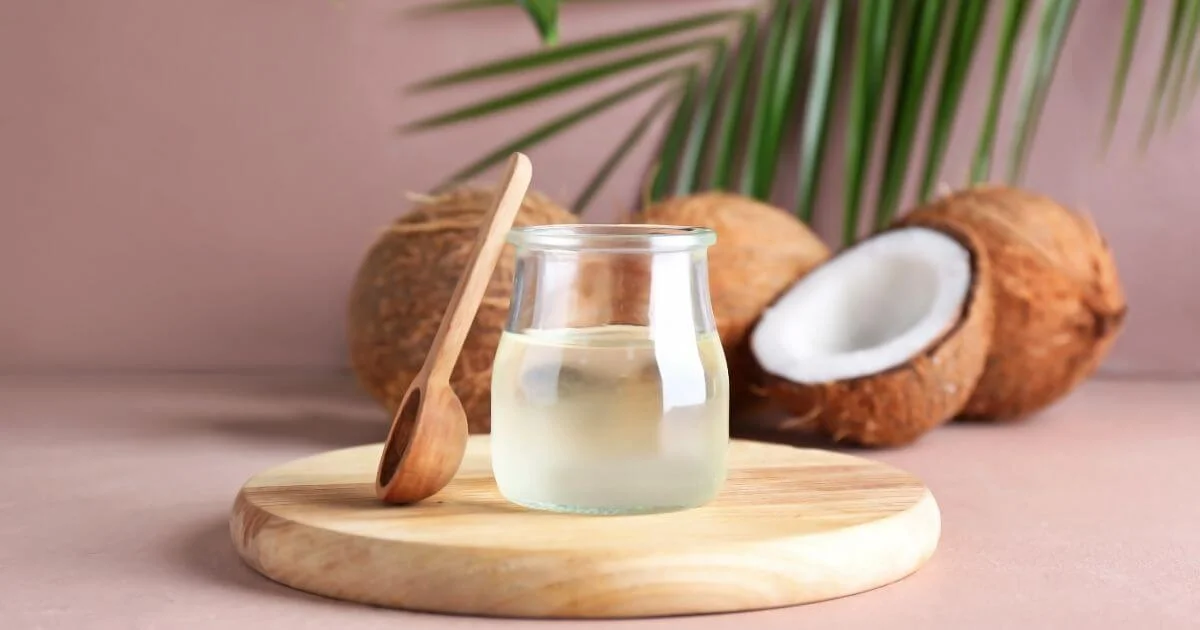
Coconut oil seems like it should be an easy solution when you need lubricant. It is inexpensive, widely available, slippery, and lasts much longer than many water-based products. That combination has led plenty of people to wonder, can you use coconut oil as lube?
The short answer is yes, some people can use coconut oil as lube, but it is not the best choice for every body, sexual activity, barrier method, or toy. The biggest concern is condom compatibility. Coconut oil is an oil-based product, which means it should not be used with latex condoms because oils can weaken latex and increase the risk of breakage.
There are also more individual considerations. Coconut oil may feel perfectly comfortable for one person and cause irritation for another. Evidence specifically examining coconut oil inside the vagina is limited, so claims that it either protects or destroys the vaginal microbiome tend to go further than the research currently supports. If you are asking can you use coconut oil as lube, the more useful question is whether it makes sense for your body, barriers, toys, and the type of sex you are having.
Table of Contents
Can You Use Coconut Oil as Lube?
Can you use coconut oil as lube? Technically, yes. Coconut oil reduces friction and stays slippery for a relatively long time, which are two qualities people generally want from a personal lubricant.
That does not necessarily make it equivalent to a product formulated and tested specifically for sexual use.
Organizations such as the American College of Obstetricians and Gynecologists generally recommend water-based or silicone-based lubricants for vaginal dryness and advise skipping oil-based products because they may cause irritation and can interfere with condoms.
Whether coconut oil is a reasonable option therefore depends heavily on context. If latex condoms or latex dental dams are part of your safer-sex strategy, the answer is no. If you are not using latex barriers, do not have a history of irritation with coconut oil, and understand that the product was not formulated specifically as genital lubricant, the decision becomes more individual.
Why Do People Use Coconut Oil as Lube?
The appeal is easy to understand. Coconut oil is smooth, inexpensive, and available almost everywhere. Unlike many water-based lubricants, it does not evaporate quickly, so it can maintain glide without frequent reapplication.
People with sensitive skin may also turn to coconut oil because ingredient lists on commercial lubricants can feel overwhelming. A jar containing one familiar ingredient can seem less intimidating than a bottle containing ingredients you have never heard of.
However, “natural” does not automatically mean less irritating, healthier, or safer for genital tissue. A sex-positive approach to sexual health means having accurate information and enough autonomy to choose what works for your body rather than assuming one type of product is inherently more virtuous than another.
When deciding can you use coconut oil as lube, evaluate how the product behaves rather than relying on whether it came from a kitchen, pharmacy, or sex shop.
Coconut Oil and Latex Condoms
If you are using latex condoms, can you use coconut oil as lube? No. This is the clearest safety issue with using coconut oil during sex. The CDC advises using water-based or silicone-based lubricants with latex condoms because oil-based lubricants can weaken latex and increase the likelihood that a condom will break. Because coconut oil is oil-based, it should not be used with latex condoms or other latex barriers.
That matters whether you are using condoms for pregnancy prevention, STI risk reduction, or both. Some polyurethane condoms are compatible with oil-based lubricants, but not every non-latex barrier has the same material or lubricant recommendations. The CDC notes that polyurethane condoms can generally be used with both water-based and oil-based lubricants, but you should still follow the manufacturer’s instructions for the specific product you are using.
Lubricant choice can also become a partner conversation, particularly when one person’s preferred product is not compatible with the condoms or barriers you use together. Being able to communicate clearly about sexual needs and boundaries can make these practical conversations feel much less awkward.
If you are unsure whether your barrier is compatible with coconut oil, a water-based lubricant is the simplest option.
Can You Use Coconut Oil as Lube for Vaginal Sex?
Can you use coconut oil as lube for vaginal sex? Some people do without experiencing obvious problems, but coconut oil is not necessarily the best default choice for vaginal lubrication. There is limited clinical research specifically evaluating coconut oil for internal vaginal use, which makes it difficult to make universal claims about how every vagina will respond.
The American College of Obstetricians and Gynecologists recommends lubricants for reducing friction and discomfort during sex, with an ACOG ob-gyn specifically recommending water-based products and noting that silicone-based lubricants can provide longer-lasting lubrication. The same guidance advises people to skip oil-based lubricants for vaginal dryness because they may cause irritation and can make condoms less effective.
One claim I would avoid is that coconut oil automatically “throws off vaginal pH.” Oil does not have pH in the same way a water-based solution does, and research specifically connecting coconut oil use with vaginal microbiome disruption is limited. Instead, the more useful question is whether a particular lubricant feels comfortable for your body and is appropriate for the barriers or other products you are using.
If you regularly experience burning, itching, unusual discharge, recurrent infections, pain during sex, or other vulvovaginal symptoms, talk with an appropriately qualified healthcare professional rather than relying on lubricant changes alone to identify the cause.
Does Coconut Oil Cause Yeast Infections or BV?
You will find plenty of articles claiming coconut oil either prevents yeast infections and bacterial vaginosis or causes them. Neither extreme is well established.
Coconut oil has demonstrated antimicrobial properties in some laboratory contexts, but that does not prove that putting it inside the vagina prevents infections. Likewise, there is not strong clinical evidence demonstrating that occasional coconut oil use inevitably causes bacterial vaginosis or candidiasis.
Individual experiences can still differ.
If you notice that symptoms consistently appear after using coconut oil, stop using it and consider discussing the pattern with your healthcare provider. If you are particularly prone to vulvovaginal irritation, choosing a lubricant formulated specifically for vaginal use may be a more predictable option.
When answering can you use coconut oil as lube, I would rather acknowledge where evidence is limited than turn anecdotal experiences into universal medical rules.
Can You Use Coconut Oil as Lube for Anal Sex?
Can you use coconut oil as lube for anal play? Again, the biggest concern is what barriers you are using.
If latex condoms or latex gloves are involved, coconut oil is not compatible with them. Use a water-based or silicone-based lubricant instead.
Lubrication is especially important during anal penetration because the rectum does not produce lubrication in the same way the vagina can. A lubricant that lasts longer can therefore be appealing.
However, you do not need coconut oil specifically to get that longevity. Silicone-based lubricants are popular for anal play because they tend to remain slippery much longer than water-based formulas while remaining compatible with latex condoms.
If you prefer coconut oil and are not using an incompatible barrier, use enough lubricant to minimize friction and stop if anything becomes painful. More lubrication does not make every activity automatically safe, but inadequate lubrication can make penetration considerably less comfortable.
Can You Use Coconut Oil as Lube With Sex Toys?
This depends on the toy.
Coconut oil is compatible with some toy materials, but there is no reliable rule that every sex toy can safely be coated in oil. Manufacturers may give specific instructions about which lubricant types are appropriate for their products.
The same caution applies to silicone lubricant. You may have heard the blanket rule that silicone lube always destroys silicone toys, but compatibility varies by formulation and material quality. Checking the manufacturer’s care instructions is more reliable than assuming all products in the same category behave identically.
If you are unsure whether you can use coconut oil as lube with a particular toy, use a water-based lubricant. Water-based formulas are generally the easiest option when you want broad compatibility across condoms and sex toys.
What About Coconut Oil and Skin?
Coconut oil is widely used as a skin moisturizer, which contributes to its popularity as lubricant.
On external skin, some people find it comfortable and moisturizing. Other people develop irritation, follicle problems, or sensitivity. A product that works beautifully on someone’s legs does not necessarily feel equally comfortable on vulvar, penile, perianal, or other sensitive skin.
Coconut allergies are possible as well, although they are not among the most common food allergies.
If you have never used coconut oil on your skin before, trying a small amount externally before using a large amount during sex is reasonable. Stop using it if you develop itching, burning, swelling, redness, or another uncomfortable reaction.
Can you use coconut oil as lube simply because your skin tolerates it as moisturizer? Not necessarily, but previous tolerance can give you more useful information than assuming “natural” means hypoallergenic.
Coconut Oil Lasts Longer Than Water-Based Lube
One genuine advantage of coconut oil is longevity.
Water-based lubricants can begin drying as their water content evaporates, although adding a small amount of water can sometimes reactivate them. Coconut oil does not behave this way, so people who dislike frequent reapplication may prefer its feel.
Silicone-based lubricants offer a similar advantage. They tend to provide long-lasting glide without the latex compatibility problem associated with oil.
This means someone asking can you use coconut oil as lube because they want something longer-lasting may actually be looking for a silicone lubricant rather than coconut oil specifically.
Is Coconut Oil Better Than Commercial Lubricant?
Coconut oil is not automatically safer than a commercial lubricant simply because it contains one familiar, “natural” ingredient. Commercial lubricants vary substantially in their formulas, and some are much better suited to vaginal use than others.
Research into how vaginal lubricants affect the vaginal microenvironment has found that highly hyperosmolar lubricants can disrupt vaginal epithelial cells in laboratory models, with higher osmolality associated with greater cellular damage in the products studied. This is one reason lubricant formulation matters, although laboratory findings do not mean every commercial lubricant will cause tissue damage during real-world use.
Coconut oil sidesteps the issue of water-based lubricant osmolality because it contains no water, but that does not automatically make it the better option. Purpose-made lubricants can offer advantages such as known condom compatibility, easier cleanup, more predictable toy compatibility, and formulas specifically designed for intimate use.
Instead of asking whether “natural” or “commercial” lubricant is universally healthier, consider the specific product, your anatomy, the type of sexual activity involved, your barrier method, and how your body responds to it.
What Should You Look for in a Personal Lubricant?
If coconut oil does not sound right for you, you still have plenty of options.
Water-based lubricants are usually the most versatile. They are compatible with latex condoms and generally work with a broad range of sex toys. Their primary downside is that some formulas dry more quickly and require reapplication.
Silicone-based lubricants provide longer-lasting glide and are also compatible with latex condoms. They can be particularly useful for anal sex or sexual activity involving water because they do not rinse away as quickly. Check compatibility with silicone toys before use.
Rather than automatically choosing products advertised as “chemical-free,” “organic,” “glycerin-free,” or “paraben-free,” pay attention to whether a product is actually designed for the kind of use you have in mind. Marketing language does not necessarily tell you whether a lubricant will be comfortable for your body.
For vaginal use, products formulated with vaginal physiology in mind may be preferable. Research has shown that lubricant osmolality and other formulation characteristics can affect epithelial tissue, although translating laboratory findings into individual clinical outcomes remains an evolving area of research.
Can You Use Coconut Oil as Lube If You Have Sensitive Skin?
Possibly, but “sensitive skin” covers a wide range of experiences.
Some people find simple coconut oil less irritating than lubricants containing fragrance, flavoring, warming ingredients, or other additives. Others react poorly to coconut oil itself.
If you frequently experience irritation with lubricants, look for relatively simple products without unnecessary fragrance or sensation-enhancing ingredients. A healthcare professional may also be helpful if irritation occurs consistently, because lubricant may not be the only possible cause.
The answer to can you use coconut oil as lube should be based on your actual response rather than assumptions about what sensitive skin is supposed to tolerate.
Coconut Oil Is Messier Than Purpose-Made Lube
Coconut oil can stain sheets, clothing, and other fabrics. Because oil does not rinse away with water alone, cleanup can also take more effort than with a water-based lubricant.
That may be completely irrelevant to you, or it may be enough reason to choose something else.
A washable towel or waterproof sex blanket can make cleanup easier if you enjoy oil-based products. You do not need to aggressively wash your genitals afterward. Gentle external cleansing is enough for most people, and the vagina itself does not require internal cleaning.
Avoid douching in an attempt to remove lubricant. The vagina is self-cleaning, and putting additional products inside it can create more irritation rather than less.
How to Use Coconut Oil More Thoughtfully
If you have considered the limitations and still want to use coconut oil, keep the process simple.
Use a plain product without fragrances or extra ingredients. Wash your hands before reaching into the container, or use a clean utensil if the jar is also used for cooking or shared by other people.
Do not combine coconut oil with latex condoms or latex barriers. If another type of barrier is involved, verify lubricant compatibility directly from its manufacturer.
Start with a relatively small amount and add more if needed. Stop if you notice burning, itching, pain, or irritation.
You do not need a special post-sex cleansing routine because you used coconut oil. Clean external skin gently as needed, wash toys according to their manufacturer’s directions, and launder fabrics normally.
Can you use coconut oil as lube this way without guaranteeing you will never experience irritation? No lubricant offers that guarantee. The goal is reducing avoidable problems and paying attention to how your body responds.
When Coconut Oil Probably Is Not the Best Choice
Coconut oil is probably not the best lubricant if you rely on latex condoms or other latex barriers.
I would also lean toward a purpose-made lubricant if you regularly experience vulvovaginal irritation, are trying to identify the cause of recurring symptoms, need predictable compatibility with multiple toys and barriers, or simply want something easier to wash off.
If pain during penetration is the reason you are looking for increasingly slippery products, do not assume the solution is necessarily stronger or longer-lasting lubricant. Lubrication can help reduce friction, but persistent pain can have many causes and deserves appropriate evaluation.
Asking can you use coconut oil as lube is useful. Asking why you need a particular lubricant can sometimes reveal even more useful information.
Frequently Asked Questions About Coconut Oil as Lube
Can You Use Coconut Oil as Lube With Condoms?
Not with latex condoms. Oil-based products can weaken latex and increase the risk of breakage. The CDC recommends water-based or silicone-based lubricants with latex condoms.
Some polyurethane condoms may be compatible with oil-based lubricants, but do not assume every non-latex condom is oil-safe. Check the manufacturer’s instructions.
Can You Use Coconut Oil as Lube Internally?
Some people use coconut oil vaginally or rectally, but it has not been studied as extensively as products specifically formulated for intimate use.
If you experience irritation, stop using it. Anyone with recurrent genital symptoms may benefit from discussing lubricant selection with a qualified healthcare professional.
Can You Use Coconut Oil as Lube With Silicone Toys?
Sometimes, but compatibility depends on the specific toy and material. Check the manufacturer’s care instructions.
If you do not know what the toy is made from, a water-based lubricant is usually the simplest choice.
Does Coconut Oil Cause BV?
There is not enough evidence to say that coconut oil universally causes bacterial vaginosis.
If you repeatedly notice symptoms after using a particular lubricant or oil, stop using it and discuss persistent symptoms with a healthcare professional.
Does Coconut Oil Cause Yeast Infections?
There is also not strong clinical evidence showing that coconut oil inevitably causes vaginal yeast infections.
Individual reactions and circumstances vary, so persistent itching, discharge, burning, or other symptoms should be evaluated rather than assumed to be caused by a lubricant.
Is Coconut Oil Safe for Anal Sex?
It can provide lubrication, but it should not be used with latex condoms or latex gloves. If latex barriers are involved, choose a water-based or silicone-based lubricant.
Is Coconut Oil Better Than Water-Based Lube?
Neither is universally better.
Water-based lubricants offer much broader condom and toy compatibility and easier cleanup. Coconut oil tends to last longer but is incompatible with latex and has not been specifically formulated for genital use.
Can You Use Coconut Oil as Lube Every Time You Have Sex?
Some people may tolerate repeated use, but there is no reason to assume that coconut oil is ideal for everyone long term.
If it works comfortably for you and does not interfere with your barriers or toys, frequency becomes an individual choice. If symptoms develop, stop and reassess.
So, Can You Use Coconut Oil as Lube?
So, can you use coconut oil as lube? Yes, under some circumstances.
Coconut oil can reduce friction and provide long-lasting glide, which explains why so many people enjoy it. The most important limitation is that coconut oil and other oil-based products should not be used with latex condoms or latex barriers because they can weaken the material.
For vaginal use, the evidence is less black and white. Some people tolerate coconut oil without difficulty, while others may find it irritating. Claims that coconut oil universally causes infections or, conversely, protects the vagina from them are stronger than the available evidence supports.
If you want the broadest compatibility with condoms, sex toys, and different types of sexual activity, a purpose-made water-based lubricant is usually the easiest starting point. A silicone-based lubricant may be a better fit if longevity is your priority.
Ultimately, answering can you use coconut oil as lube requires more than asking whether coconut oil is slippery. Consider barrier compatibility, your own history of irritation, the type of sex you are having, the materials of any toys involved, and how much cleanup you want afterward.
There is no prize for using the most “natural” lubricant. The best lubricant is one that feels comfortable, works with your safer-sex practices, and helps you have the kind of pleasurable experience you actually want.
Disclaimer: Lilithfoxx is not a medical professional. This article is provided for educational and informational purposes only and should not be considered medical advice. For persistent pain, irritation, recurrent infections, or other sexual health concerns, consult an appropriately qualified healthcare professional.